FOR OFFICES
OFFICES & WORKSPACES
Smart hydration for modern workspaces
SMART WATER DISPENSER
Reduce cost & Boost productivity
OFFICE MANAGERS
Manage hydration with zero hassle
FOR HOTELS
HOTELS
Elevate your guest experience
Manage beverages with zero hassle
Streamline F&B with Aquablu
SOLUTION
How to Choose the Best Office Water Dispenser: 6 Types Compared
8 min
8 min
|
|
July
8 min
|
July

The six types of office water dispensers, how to size them properly, and how to choose the one that fits your workplace.
Every office needs drinking water. And there's much more to the right choice than botEvery office needs drinking water, and water for offices is much more than a choice between bottled vs plumbed.
Some systems serve pure drinking water. Others add sparkling, hot and functional beverages that give people more reasons to refill throughout the day. Factor in your team size, available space and plumbing access, and the best option quickly starts to emerge.
Most workplaces choose from one of six dispenser types: plumbed-in systems, bottled dispensers, countertop units, wall-mounted dispensers, under-sink systems and integrated taps. Each solution has its own strengths, limitations and ideal use case.
To help you decide the best fit for your office, we've assessed every option against the same four questions:
How is it supplied?
What can it dispense?
Where does it fit best?
What are the trade-offs?
Let's see how the six most common office water dispensers stack up.
The 6 Types of Water Dispensers
1. Plumbed-In (Point-of-Use) Dispensers
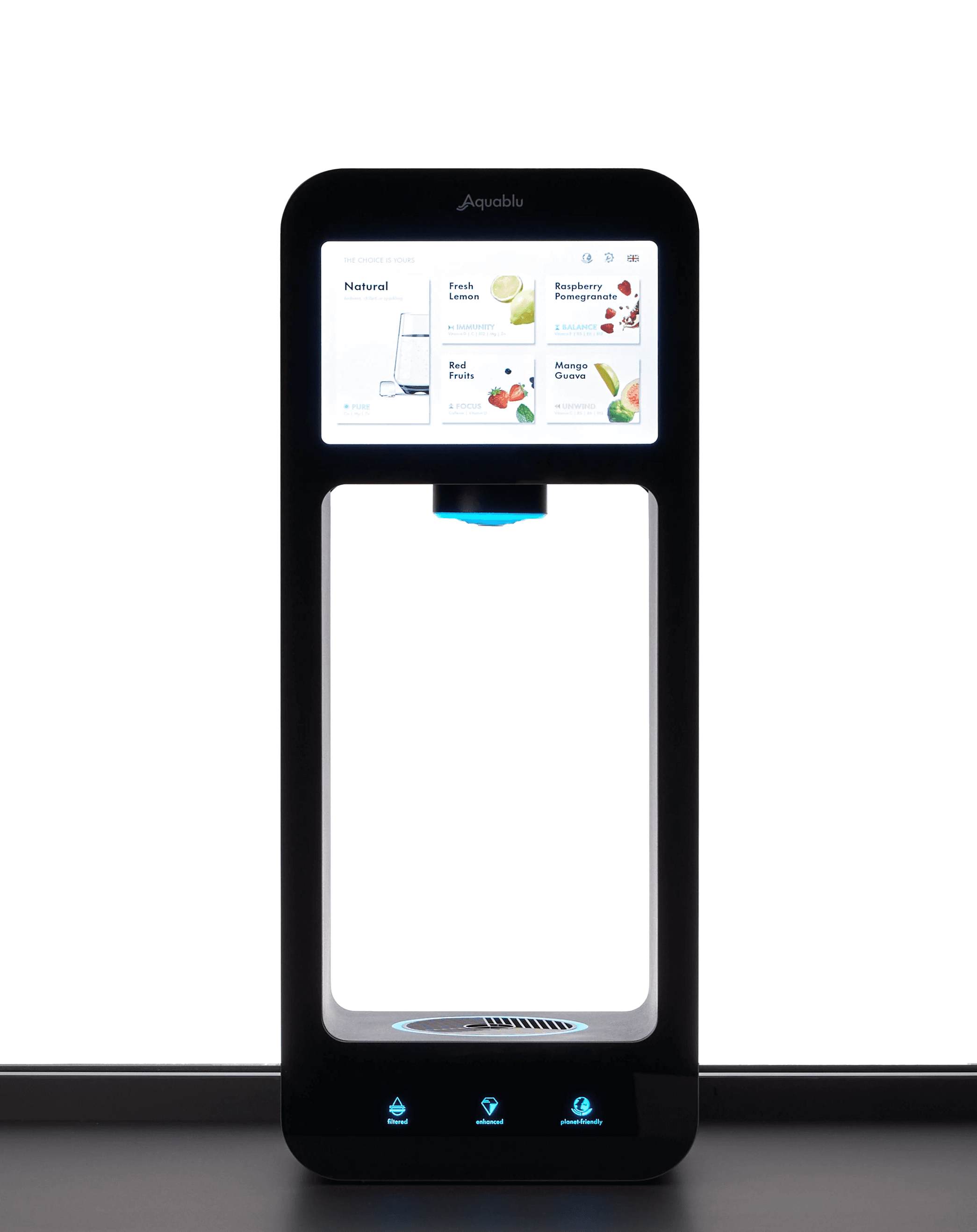
Supply: Mains-connected
Beverage options: Still, chilled, sparkling, hot (some connected systems also dispense functional beverages)
Plumbed-in water dispensers connect directly to your building's mains water supply. That means no bottle deliveries, no storage room filled with spare bottles, and no recycling to manage. Depending on your space, they can be installed as freestanding units, countertop dispensers, under-sink systems or fully integrated taps. Water is filtered on demand, giving your team a continuous supply throughout the day.
This is also the category with the widest beverage range. Hot and chilled water alone aren't unique - many dispensers offer both. Where connected systems stand apart is that some also pour sparkling water and functional beverages from the same tap, giving people more choice without changing the way the system is supplied.
Aquablu's REFILL+ Series 2 is one example of a connected system in this category.
Best for
Medium to large offices
Corporate headquarters
Hotels and hospitality
Hybrid workplaces
Offices with reliable plumbing access
Teams with consistent daily demand
Key trade-off
A plumbed-in system needs professional installation and routine filter servicing. The upfront investment is usually higher than a bottled dispenser, but as teams grow and water consumption increases, the day-to-day running costs often work out lower.
2. Bottled Water Dispensers
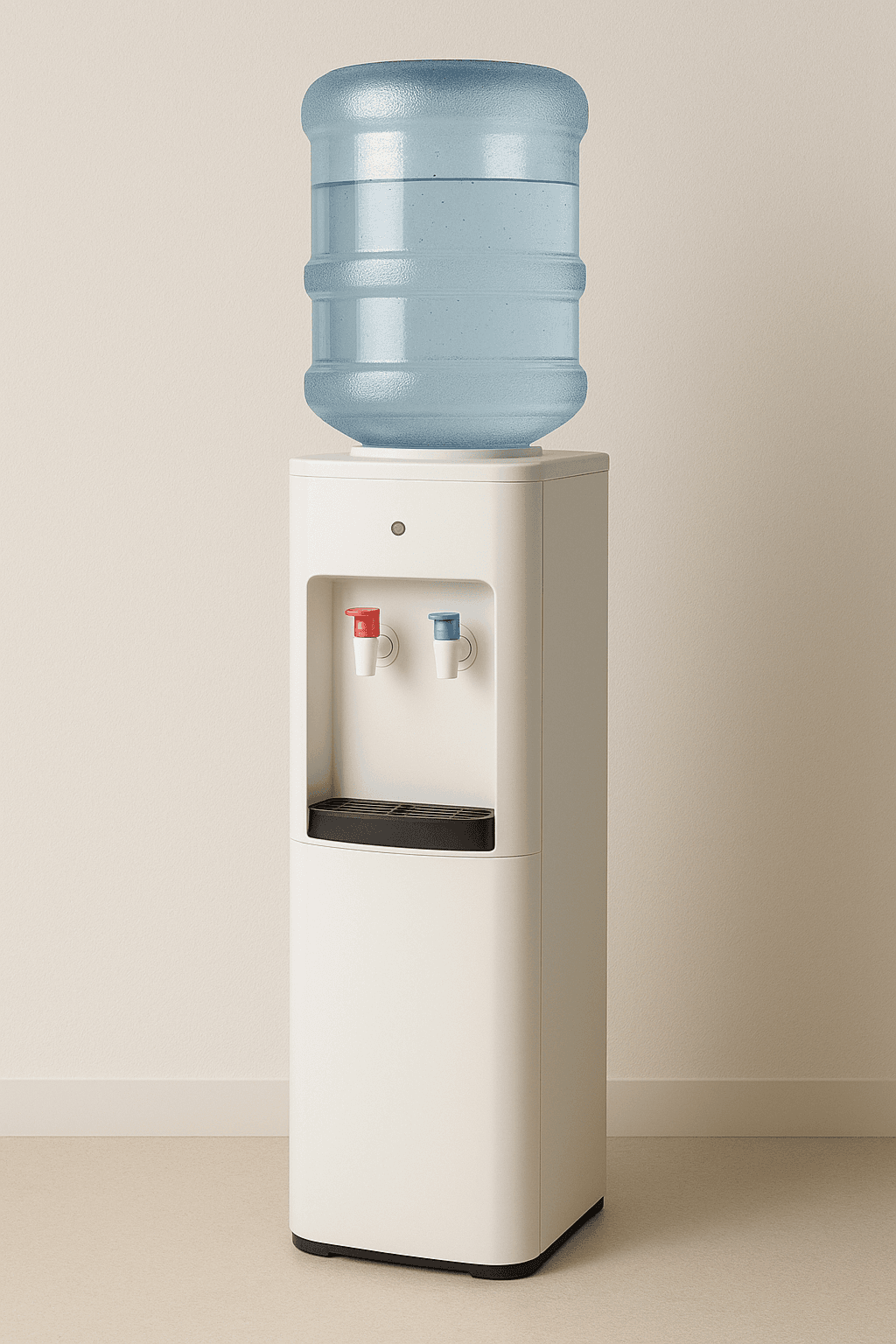
Supply: Replaceable water bottles
Beverage options: Still, chilled and hot
Bottled water dispensers store water in replaceable bottles rather than connecting to your mains supply. Because they don't need plumbing, they're quick to install, easy to move and well suited to smaller offices, temporary workspaces or buildings where a permanent water connection isn't practical.
They come in two main designs. Top-load models place the bottle above the dispenser, making it easy to see when it's time for a replacement. Bottom-load models store the bottle inside the cabinet, giving the unit a cleaner appearance and making bottle changes easier, particularly for larger containers. Most are freestanding floor units, although countertop versions are available where space is limited.
The biggest consideration comes after installation. Bottles still need to be ordered, delivered, stored and replaced, and someone usually ends up keeping an eye on stock levels. As teams grow and water consumption increases, that ongoing administration—and the cost that comes with it—becomes more noticeable.
If you're considering a bottled dispenser, it's worth understanding how those ongoing costs compare with a mains-fed system as your office grows. Read our guide on bottled water coolers and when to make the switch.
Best for
Small offices
Temporary or leased workspaces
Buildings without plumbing access
Low daily water consumption
Businesses looking for a simple plug-and-play solution
Key trade-off
Bottled dispensers are quick to install and easy to relocate. The trade-off is the ongoing cycle of deliveries, bottle storage and stock management, which becomes harder to justify as demand grows.
3. Countertop & Portable Water Dispensers
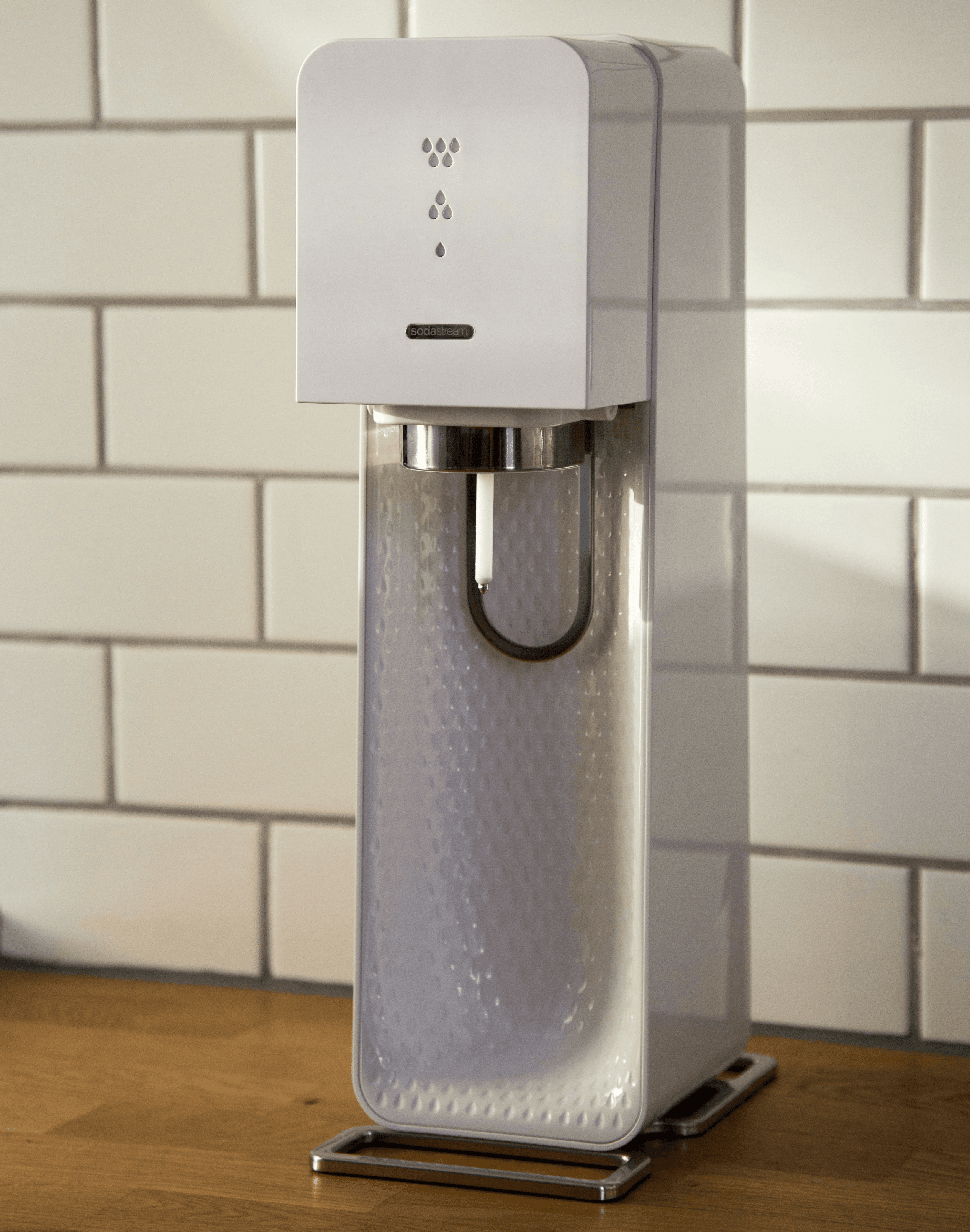
Supply: Bottled or mains-connected (depending on the model)
Beverage options: Still water, with some electric models also dispensing chilled and hot water
Countertop and portable water dispensers are built for flexibility. Compact by design, they take up little space and are easy to move between rooms or locations. Some connect to the mains, while others use refillable bottles or manual reservoirs, making them a practical choice where permanent installation isn't needed.
They're most at home in smaller spaces, including home offices, meeting rooms, temporary workplaces and shared offices where water demand is relatively low and convenience takes priority over capacity.
The trade-off is volume. Smaller tanks and bottles mean more frequent refilling or replacement, so they're less suited to larger teams or busy workplaces where people rely on the dispenser throughout the day.
Best for
Home offices
Small businesses
Meeting rooms
Temporary workplaces
Events and pop-up spaces
Teams with low daily water consumption
Key trade-off
Countertop and portable dispensers are quick to set up, easy to move and work well in smaller spaces. As teams grow or daily demand increases, their limited capacity often means businesses move to larger freestanding or mains-connected systems.
4. Wall-Mounted Dispensers
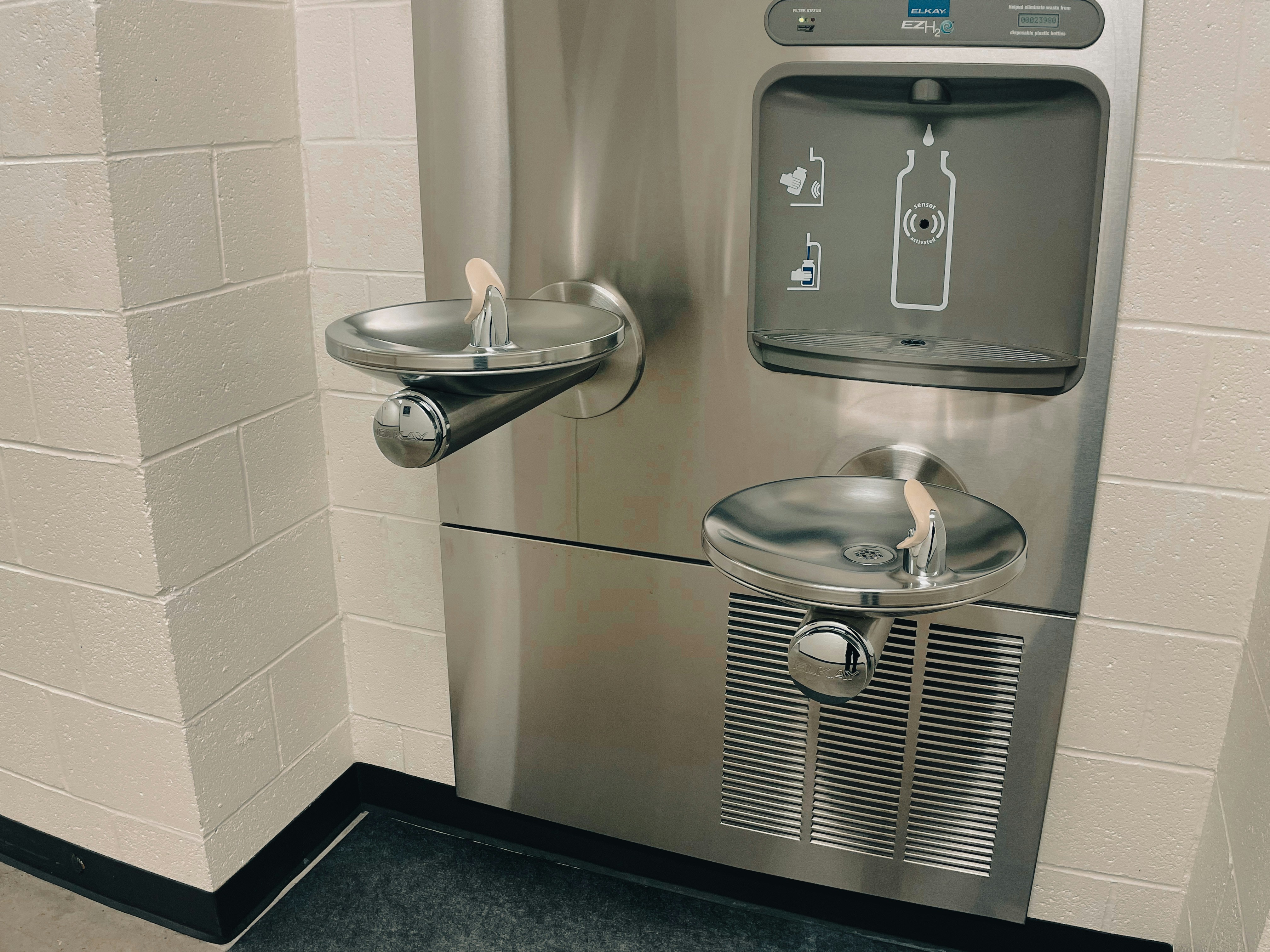
Supply: Mains-connected
Beverage options: Still and chilled water (some models also dispense hot water)
Wall-mounted water dispensers free up valuable floor space by mounting directly to the wall. Built as permanent fixtures, they're designed for busy environments where reliability, durability and easy maintenance matter more than flexibility.
You'll most often find them in schools, hospitals, public buildings, factories and other high-traffic workplaces where they need to perform day after day with minimal intervention.
Many modern models also include bottle-filling stations, making it easier for people to refill reusable bottles and helping organisations reduce single-use plastic waste.
Unlike freestanding or countertop dispensers, wall-mounted units aren't designed to move with your workspace. They excel in places where the layout is fixed and water demand is predictable.
Best for
Schools and universities
Healthcare facilities
Public buildings
Factories and warehouses
High-traffic workplaces
Offices where floor space is limited
Key trade-off
Wall-mounted dispensers make the most of limited space and stand up well to heavy daily use. The trade-off is flexibility,they're permanent installations, so relocating them is far more involved than moving a freestanding unit.
5. Under-Sink Dispensers
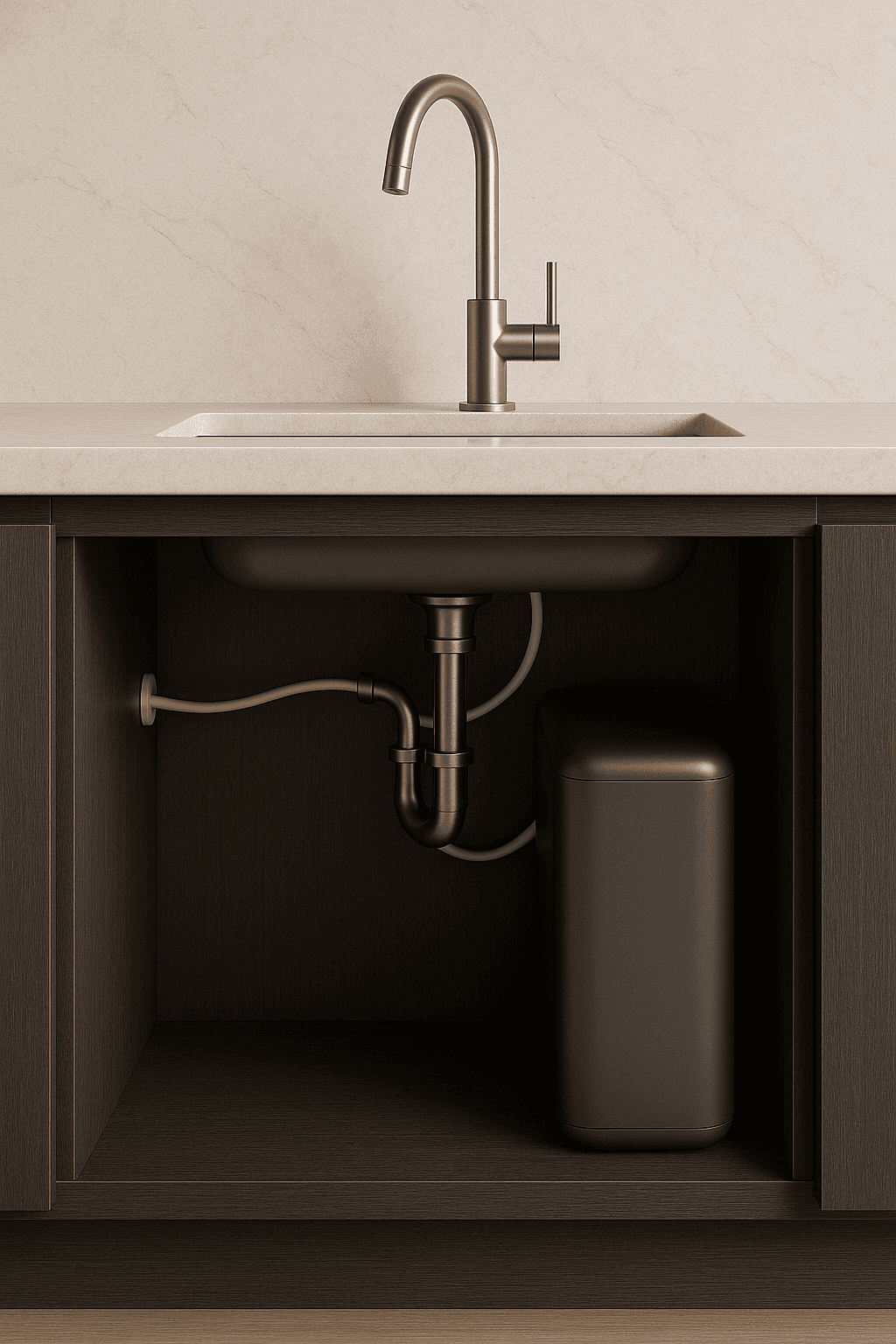
Supply: Mains-connected
Beverage options: Still, chilled and filtered water (some systems also pour sparkling and hot water)
Under-sink systems pair naturally with a water tap for office use — the technology stays out of sight, with filtration, cooling and carbonation sitting neatly beneath the countertop and only a dedicated tap above the surface. The result is a cleaner workspace with filtered water always ready when it's needed.
They’re a popular choice for spaces where design matters as much as function. Executive kitchens, client-facing areas and premium office fit-outs often choose under-sink systems because they deliver the convenience of instant filtered water without adding another appliance to the room.
They can do far more than filtered water alone. Many systems also pour chilled, sparkling and hot water from the same tap, giving teams more choice while keeping the kitchen streamlined and clutter-free.
Best for
Premium office kitchens
Executive and client-facing spaces
Hospitality environments
Workplace renovations and fit-outs
Businesses prioritising a clean, integrated look
Key trade-off
Under-sink systems create a seamless finish and free up valuable bench space. They do need cabinet space below the counter and a more involved installation than a standalone dispenser. The result is a cleaner, more integrated solution that keeps the workspace looking sharp.
6. Integrated (Built-In) Dispensers
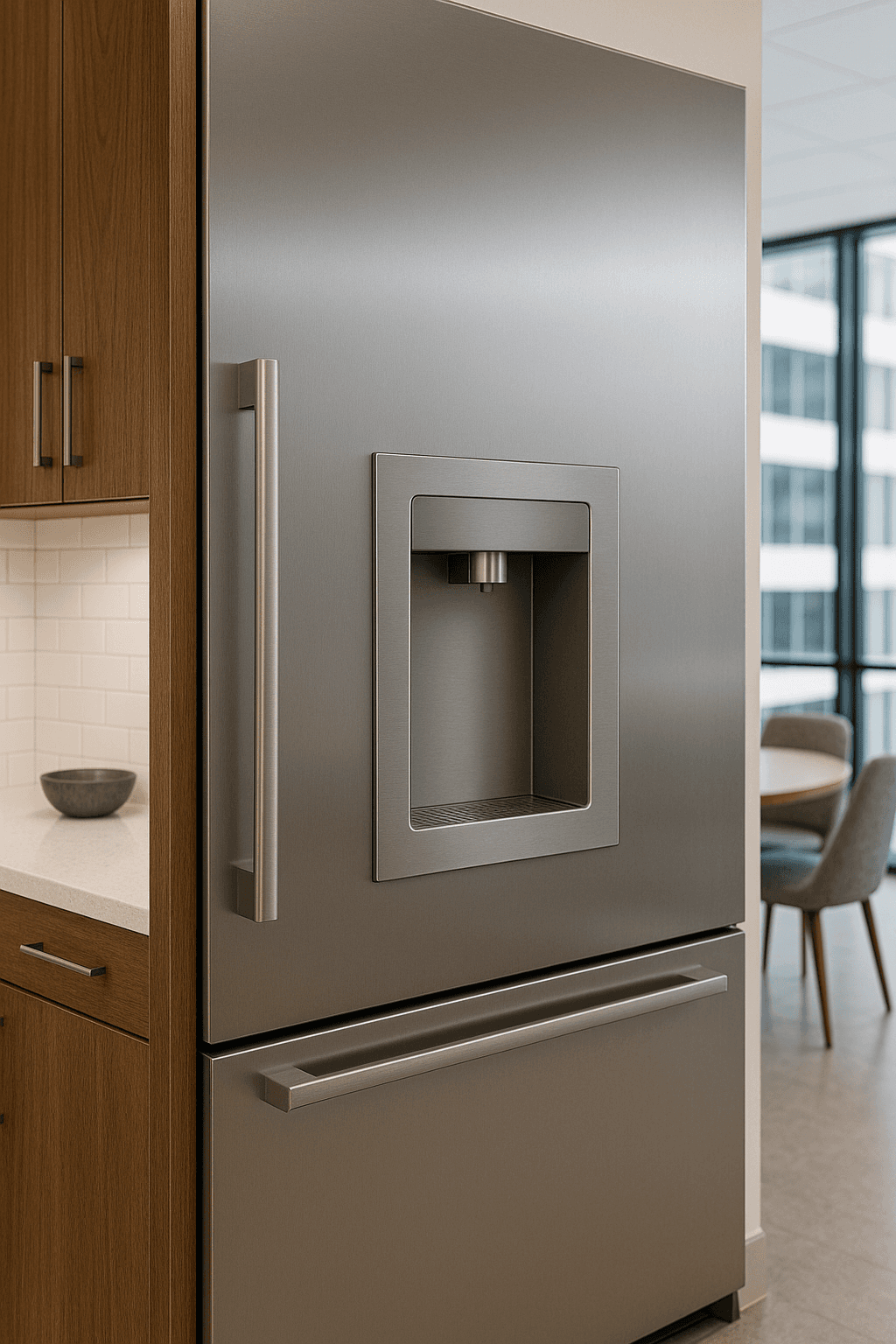
Supply: Mains-connected
Beverage options: Still, chilled, sparkling and hot water (system dependent)
Integrated water dispensers are designed to become part of the workplace — not just another appliance added to it. Built into cabinetry, kitchen islands and breakout spaces, they form part of the overall office design rather than sitting separately on a bench.
This approach is becoming increasingly popular in modern workplaces where the kitchen is more than a utility area — it’s a space for connection, collaboration and employee experience. By integrating the system into the design, businesses get high-quality drinking water without compromising a clean, refined aesthetic.
Integrated systems deliver the same beverage options as other mains-connected solutions, including chilled, sparkling and hot water, while keeping the technology hidden within the surrounding joinery. Some systems also offer functional flavoured drinks, giving teams more choice from a single built-in tap.
Best for
New office fit-outs
Workplace refurbishments
Premium kitchens and breakout spaces
Design-led offices
Hospitality environments
Key trade-off
Integrated systems deliver the most seamless finish, but they need to be planned early. Installation works best when it forms part of the wider kitchen, cabinetry or joinery design — creating a result that feels built in from the start, not added later.
How to Choose the Right Water Dispenser for Your Office
Choosing the right water dispenser starts with five key questions:
Team size
Smaller teams are often best served by bottled or countertop systems, while larger workplaces benefit from mains-connected solutions designed to handle higher daily demand.
Water supply
If plumbing is available, a connected system removes the need for ongoing bottle deliveries. If it isn’t, bottled coolers or smart dispensers with jerry cans provide a flexible alternative.
Beverage options
Think beyond still water. Some workplaces need simple hydration, while others want chilled, sparkling, hot or functional beverages that give teams more choice throughout the day.
Installation
Some systems plug in and go. Others integrate into cabinetry or require professional installation. The right fit depends on whether your workplace needs flexibility or a permanent built-in solution.
Running costs
The lowest upfront price doesn’t always deliver the lowest cost over time. Deliveries, servicing, storage and maintenance all influence the true day-to-day running costs.
Comparison at a Glance
Type | Supply | Beverage Options | Best For | Key Trade-off |
|---|---|---|---|---|
Plumbed-in | Mains | Still, chilled, sparkling, hot (some also offer flavours) | Medium to large offices | Higher upfront investment, lower ongoing logistics |
Bottled | Replaceable bottles | Still, chilled, hot | Small offices, temporary workplaces | Ongoing deliveries and bottle management |
Countertop & Portable | Bottled or manually filled | Still, chilled or hot (model dependent) | Small teams and meeting rooms | Limited capacity |
Wall-mounted | Mains | Still, chilled (some hot) | Public buildings and high-traffic workplaces | Permanent installation |
Under-sink | Mains | Still, chilled (some sparkling and hot) | Premium kitchens | More involved installation |
Integrated | Mains | Still, chilled, sparkling and hot (system dependent) | New fit-outs and refurbishments | Best planned during a renovation |
Beyond the Dispenser: What Determines the Right Choice
Choosing the right water dispenser isn’t just about the machine itself. The best solution reduces friction, gets used every day, controls long-term costs and fits the way your workplace operates.
The final decision usually comes down to four key questions:
How much administration will it create?
Will people actually use it?
What will it cost over time?
Is it the right fit for the space?
How Much Admin Will It Create?
For many facilities managers, this matters more than the purchase price.
A dispenser that looks affordable upfront can quickly become a burden if it creates ongoing work. When comparing systems, look beyond the specification sheet and ask:
How often does the system need servicing?
What maintenance can your team handle themselves?
Can the supplier identify issues before users report them?
A connected mains system removes much of this workload. The REFILL+ Series 2, for example, includes two scheduled maintenance visits each year, usage-based filter changes and remote monitoring through AURA. This helps identify potential issues early, before they disrupt the workplace experience.
"Asking an FM to replace a filter on a schedule or do a stock take doesn't actually tell you what's going on with the system. When you're tracking every dispense you get the full picture. So instead of waiting for someone to report a problem, we already know about it and can get ahead of it."
Ashlyn Kennedy, Product Manager, Aquablu
→ Learn more about Aquablu's managed service model
How Much Will The Team Use It
A water dispenser only delivers value if people use it consistently. That's where beverage choice makes a difference.
Offices with 51 to 100 employees average 0.33 litres of water per person, per day. When sparkling water and functional beverages are introduced, Aquablu customers typically see consumption increase by 2.6×, as greater choice encourages people to drink more throughout the day.
Still water alone doesn't always change habits. Offering chilled, sparkling and functional beverages gives people more reasons to refill, helping hydration become part of the working day rather than an occasional choice.
That pattern is reflected in customer workplaces. At STARP, a sports marketing agency, switching to Aquablu helped replace around 100 cans each week, with sparkling water quickly becoming the team's favourite.
"I'm a big fan of the sparkling, and people are very bothered when it's not there."
Carolien van 't Hek, Managing Partner, STARP
A similar story played out at Visma YouServe, where a new hydration point became part of a redesigned office café intended to encourage employees back into the workplace.
"We wanted the workplace to be fun again—a place where you meet colleagues, play a game, have a chat at the coffee machine... or now, the Aquablu machine."
Ingeborg Brandsma, Marketing Manager, Visma YouServe
→ Read the Visma YouServe case study
The Cost Question
For any business, cost matters, but the real question is value. The right water solution should reduce ongoing effort, control running costs and deliver a better workplace experience over time.
For very small offices, a basic bottled cooler or simple plumbed dispenser may be the lowest-cost option upfront. As teams grow and daily consumption increases, however, delivery costs, storage requirements and ongoing management can quickly change the equation.
For example, an office of around 25 people consuming approximately 1,000 drinks per month could spend around €800 per month on bottled water deliveries. REFILL+ Kickstart starts from €390 per month, helping reduce day-to-day running costs while removing bottle deliveries, storage and replacement.
The right comparison isn’t the upfront purchase price, it’s the total cost of ownership across the life of the system.
When a Water Dispenser Isn't the Right Fit
Not every workplace needs a connected hydration system.
A simpler solution may be the better choice if:
Your office has fewer than around 25 regular users
Daily water consumption is low
You’re in a temporary workspace without long-term plans
A basic bottled cooler or filtered water jug already meets your needs
The best solution isn’t always the most advanced one. It’s the one that fits your team, your space and the way your workplace operates.
If you’re unsure which option makes sense for your office, a conversation before requesting a quote can help identify the right fit.
→Speak to an Aquablu specialist
Our recommendation for most offices
For most workplaces with 25 or more regular users, a plumbed-in or smart dispenser is the option that holds up over time. Once daily consumption is consistent, the bottle cycle - ordering, storing, lifting, replacing - costs more in admin than it saves on the upfront price, and it doesn't get easier as the team grows. A mains-fed system removes that cycle entirely. A connected one goes a step further: servicing follows actual usage rather than a fixed schedule, and sparkling, hot and functional options give people more reason to refill during the day. If your office has reliable plumbing access and a settled team, a water dispenser for the office is the sensible starting point. Bottled and countertop units still make sense for small, temporary or plumbing-free spaces — connected isn't always better, it's better as soon as usage becomes routine.
Where REFILL+ Series 2 Fits
If you’ve worked through the options and decided a connected mains-fed system is the right fit, REFILL+ Series 2 brings everything together in one complete hydration solution.
Instead of adding another appliance to the office kitchen, it combines chilled still water, sparkling water, hot water and functional flavoured drinks in a single connected system. It’s available as a countertop unit, under-sink system or fully integrated solution for new kitchen fit-outs. For locations without a plumbing connection, the Smart Jerrycan provides a standalone alternative.
Behind every dispense, AURA captures the data that keeps the system running efficiently. Maintenance follows actual usage rather than fixed schedules, while water consumption data can be exported to support sustainability reporting, including CSRD, GRI and internal ESG requirements.
For organisations looking to improve employee experience while reducing the administration of bottled water, REFILL+ Series 2 replaces multiple appliances and delivery processes with one connected hydration system.
Still comparing options? Explore how smart office water dispenser work for growing workplaces.
See What a Connected System Could Deliver
If you’ve determined a connected water dispenser is the right fit for your workplace, the next step is understanding the value it could deliver for your office.
Our ROI calculator compares your current setup with REFILL+ Series 2 based on team size and estimated consumption, showing potential savings and your break-even point in under a minute.
Prefer to discuss your options? Book a 15-minute demo and we’ll walk through your current setup, your goals and the solution that best fits your workplace.
The 6 Types of Water Dispensers
1. Plumbed-In (Point-of-Use) Dispensers
Supply: Mains-connected
Beverage options: Still, chilled, sparkling, hot (some connected systems also dispense functional beverages)
Plumbed-in water dispensers connect directly to your building's mains water supply. That means no bottle deliveries, no storage room filled with spare bottles, and no recycling to manage. Depending on your space, they can be installed as freestanding units, countertop dispensers, under-sink systems or fully integrated taps. Water is filtered on demand, giving your team a continuous supply throughout the day.
This is also the category with the widest beverage range. Hot and chilled water alone aren't unique - many dispensers offer both. Where connected systems stand apart is that some also pour sparkling water and functional beverages from the same tap, giving people more choice without changing the way the system is supplied.
Aquablu's REFILL+ Series 2 is one example of a connected system in this category.
Best for
Medium to large offices
Corporate headquarters
Hotels and hospitality
Hybrid workplaces
Offices with reliable plumbing access
Teams with consistent daily demand
Key trade-off
A plumbed-in system needs professional installation and routine filter servicing. The upfront investment is usually higher than a bottled dispenser, but as teams grow and water consumption increases, the day-to-day running costs often work out lower.
2. Bottled Water Dispensers
Supply: Replaceable water bottles
Beverage options: Still, chilled and hot
Bottled water dispensers store water in replaceable bottles rather than connecting to your mains supply. Because they don't need plumbing, they're quick to install, easy to move and well suited to smaller offices, temporary workspaces or buildings where a permanent water connection isn't practical.
They come in two main designs. Top-load models place the bottle above the dispenser, making it easy to see when it's time for a replacement. Bottom-load models store the bottle inside the cabinet, giving the unit a cleaner appearance and making bottle changes easier, particularly for larger containers. Most are freestanding floor units, although countertop versions are available where space is limited.
The biggest consideration comes after installation. Bottles still need to be ordered, delivered, stored and replaced, and someone usually ends up keeping an eye on stock levels. As teams grow and water consumption increases, that ongoing administration—and the cost that comes with it—becomes more noticeable.
If you're considering a bottled dispenser, it's worth understanding how those ongoing costs compare with a mains-fed system as your office grows. Read our guide on bottled water coolers and when to make the switch.
Best for
Small offices
Temporary or leased workspaces
Buildings without plumbing access
Low daily water consumption
Businesses looking for a simple plug-and-play solution
Key trade-off
Bottled dispensers are quick to install and easy to relocate. The trade-off is the ongoing cycle of deliveries, bottle storage and stock management, which becomes harder to justify as demand grows.
3. Countertop & Portable Water Dispensers
Supply: Bottled or mains-connected (depending on the model)
Beverage options: Still water, with some electric models also dispensing chilled and hot water
Countertop and portable water dispensers are built for flexibility. Compact by design, they take up little space and are easy to move between rooms or locations. Some connect to the mains, while others use refillable bottles or manual reservoirs, making them a practical choice where permanent installation isn't needed.
They're most at home in smaller spaces, including home offices, meeting rooms, temporary workplaces and shared offices where water demand is relatively low and convenience takes priority over capacity.
The trade-off is volume. Smaller tanks and bottles mean more frequent refilling or replacement, so they're less suited to larger teams or busy workplaces where people rely on the dispenser throughout the day.
Best for
Home offices
Small businesses
Meeting rooms
Temporary workplaces
Events and pop-up spaces
Teams with low daily water consumption
Key trade-off
Countertop and portable dispensers are quick to set up, easy to move and work well in smaller spaces. As teams grow or daily demand increases, their limited capacity often means businesses move to larger freestanding or mains-connected systems.
4. Wall-Mounted Dispensers
Supply: Mains-connected
Beverage options: Still and chilled water (some models also dispense hot water)
Wall-mounted water dispensers free up valuable floor space by mounting directly to the wall. Built as permanent fixtures, they're designed for busy environments where reliability, durability and easy maintenance matter more than flexibility.
You'll most often find them in schools, hospitals, public buildings, factories and other high-traffic workplaces where they need to perform day after day with minimal intervention.
Many modern models also include bottle-filling stations, making it easier for people to refill reusable bottles and helping organisations reduce single-use plastic waste.
Unlike freestanding or countertop dispensers, wall-mounted units aren't designed to move with your workspace. They excel in places where the layout is fixed and water demand is predictable.
Best for
Schools and universities
Healthcare facilities
Public buildings
Factories and warehouses
High-traffic workplaces
Offices where floor space is limited
Key trade-off
Wall-mounted dispensers make the most of limited space and stand up well to heavy daily use. The trade-off is flexibility,they're permanent installations, so relocating them is far more involved than moving a freestanding unit.
5. Under-Sink Dispensers
Supply: Mains-connected
Beverage options: Still, chilled and filtered water (some systems also pour sparkling and hot water)
Under-sink systems pair naturally with a water tap for office use — the technology stays out of sight, with filtration, cooling and carbonation sitting neatly beneath the countertop and only a dedicated tap above the surface. The result is a cleaner workspace with filtered water always ready when it's needed.
They’re a popular choice for spaces where design matters as much as function. Executive kitchens, client-facing areas and premium office fit-outs often choose under-sink systems because they deliver the convenience of instant filtered water without adding another appliance to the room.
They can do far more than filtered water alone. Many systems also pour chilled, sparkling and hot water from the same tap, giving teams more choice while keeping the kitchen streamlined and clutter-free.
Best for
Premium office kitchens
Executive and client-facing spaces
Hospitality environments
Workplace renovations and fit-outs
Businesses prioritising a clean, integrated look
Key trade-off
Under-sink systems create a seamless finish and free up valuable bench space. They do need cabinet space below the counter and a more involved installation than a standalone dispenser. The result is a cleaner, more integrated solution that keeps the workspace looking sharp.
6. Integrated (Built-In) Dispensers
Supply: Mains-connected
Beverage options: Still, chilled, sparkling and hot water (system dependent)
Integrated water dispensers are designed to become part of the workplace — not just another appliance added to it. Built into cabinetry, kitchen islands and breakout spaces, they form part of the overall office design rather than sitting separately on a bench.
This approach is becoming increasingly popular in modern workplaces where the kitchen is more than a utility area — it’s a space for connection, collaboration and employee experience. By integrating the system into the design, businesses get high-quality drinking water without compromising a clean, refined aesthetic.
Integrated systems deliver the same beverage options as other mains-connected solutions, including chilled, sparkling and hot water, while keeping the technology hidden within the surrounding joinery. Some systems also offer functional flavoured drinks, giving teams more choice from a single built-in tap.
Best for
New office fit-outs
Workplace refurbishments
Premium kitchens and breakout spaces
Design-led offices
Hospitality environments
Key trade-off
Integrated systems deliver the most seamless finish, but they need to be planned early. Installation works best when it forms part of the wider kitchen, cabinetry or joinery design — creating a result that feels built in from the start, not added later.
How to Choose the Right Water Dispenser for Your Office
Choosing the right water dispenser starts with five key questions:
Team size
Smaller teams are often best served by bottled or countertop systems, while larger workplaces benefit from mains-connected solutions designed to handle higher daily demand.
Water supply
If plumbing is available, a connected system removes the need for ongoing bottle deliveries. If it isn’t, bottled coolers or smart dispensers with jerry cans provide a flexible alternative.
Beverage options
Think beyond still water. Some workplaces need simple hydration, while others want chilled, sparkling, hot or functional beverages that give teams more choice throughout the day.
Installation
Some systems plug in and go. Others integrate into cabinetry or require professional installation. The right fit depends on whether your workplace needs flexibility or a permanent built-in solution.
Running costs
The lowest upfront price doesn’t always deliver the lowest cost over time. Deliveries, servicing, storage and maintenance all influence the true day-to-day running costs.
Comparison at a Glance
Type | Supply | Beverage Options | Best For | Key Trade-off |
|---|---|---|---|---|
Plumbed-in | Mains | Still, chilled, sparkling, hot (some also offer flavours) | Medium to large offices | Higher upfront investment, lower ongoing logistics |
Bottled | Replaceable bottles | Still, chilled, hot | Small offices, temporary workplaces | Ongoing deliveries and bottle management |
Countertop & Portable | Bottled or manually filled | Still, chilled or hot (model dependent) | Small teams and meeting rooms | Limited capacity |
Wall-mounted | Mains | Still, chilled (some hot) | Public buildings and high-traffic workplaces | Permanent installation |
Under-sink | Mains | Still, chilled (some sparkling and hot) | Premium kitchens | More involved installation |
Integrated | Mains | Still, chilled, sparkling and hot (system dependent) | New fit-outs and refurbishments | Best planned during a renovation |
Beyond the Dispenser: What Determines the Right Choice
Choosing the right water dispenser isn’t just about the machine itself. The best solution reduces friction, gets used every day, controls long-term costs and fits the way your workplace operates.
The final decision usually comes down to four key questions:
How much administration will it create?
Will people actually use it?
What will it cost over time?
Is it the right fit for the space?
How Much Admin Will It Create?
For many facilities managers, this matters more than the purchase price.
A dispenser that looks affordable upfront can quickly become a burden if it creates ongoing work. When comparing systems, look beyond the specification sheet and ask:
How often does the system need servicing?
What maintenance can your team handle themselves?
Can the supplier identify issues before users report them?
A connected mains system removes much of this workload. The REFILL+ Series 2, for example, includes two scheduled maintenance visits each year, usage-based filter changes and remote monitoring through AURA. This helps identify potential issues early, before they disrupt the workplace experience.
"Asking an FM to replace a filter on a schedule or do a stock take doesn't actually tell you what's going on with the system. When you're tracking every dispense you get the full picture. So instead of waiting for someone to report a problem, we already know about it and can get ahead of it."
Ashlyn Kennedy, Product Manager, Aquablu
→ Learn more about Aquablu's managed service model
How Much Will The Team Use It
A water dispenser only delivers value if people use it consistently. That's where beverage choice makes a difference.
Offices with 51 to 100 employees average 0.33 litres of water per person, per day. When sparkling water and functional beverages are introduced, Aquablu customers typically see consumption increase by 2.6×, as greater choice encourages people to drink more throughout the day.
Still water alone doesn't always change habits. Offering chilled, sparkling and functional beverages gives people more reasons to refill, helping hydration become part of the working day rather than an occasional choice.
That pattern is reflected in customer workplaces. At STARP, a sports marketing agency, switching to Aquablu helped replace around 100 cans each week, with sparkling water quickly becoming the team's favourite.
"I'm a big fan of the sparkling, and people are very bothered when it's not there."
Carolien van 't Hek, Managing Partner, STARP
A similar story played out at Visma YouServe, where a new hydration point became part of a redesigned office café intended to encourage employees back into the workplace.
"We wanted the workplace to be fun again—a place where you meet colleagues, play a game, have a chat at the coffee machine... or now, the Aquablu machine."
Ingeborg Brandsma, Marketing Manager, Visma YouServe
→ Read the Visma YouServe case study
The Cost Question
For any business, cost matters, but the real question is value. The right water solution should reduce ongoing effort, control running costs and deliver a better workplace experience over time.
For very small offices, a basic bottled cooler or simple plumbed dispenser may be the lowest-cost option upfront. As teams grow and daily consumption increases, however, delivery costs, storage requirements and ongoing management can quickly change the equation.
For example, an office of around 25 people consuming approximately 1,000 drinks per month could spend around €800 per month on bottled water deliveries. REFILL+ Kickstart starts from €390 per month, helping reduce day-to-day running costs while removing bottle deliveries, storage and replacement.
The right comparison isn’t the upfront purchase price, it’s the total cost of ownership across the life of the system.
When a Water Dispenser Isn't the Right Fit
Not every workplace needs a connected hydration system.
A simpler solution may be the better choice if:
Your office has fewer than around 25 regular users
Daily water consumption is low
You’re in a temporary workspace without long-term plans
A basic bottled cooler or filtered water jug already meets your needs
The best solution isn’t always the most advanced one. It’s the one that fits your team, your space and the way your workplace operates.
If you’re unsure which option makes sense for your office, a conversation before requesting a quote can help identify the right fit.
→Speak to an Aquablu specialist
Our recommendation for most offices
For most workplaces with 25 or more regular users, a plumbed-in or smart dispenser is the option that holds up over time. Once daily consumption is consistent, the bottle cycle - ordering, storing, lifting, replacing - costs more in admin than it saves on the upfront price, and it doesn't get easier as the team grows. A mains-fed system removes that cycle entirely. A connected one goes a step further: servicing follows actual usage rather than a fixed schedule, and sparkling, hot and functional options give people more reason to refill during the day. If your office has reliable plumbing access and a settled team, a water dispenser for the office is the sensible starting point. Bottled and countertop units still make sense for small, temporary or plumbing-free spaces — connected isn't always better, it's better as soon as usage becomes routine.
Where REFILL+ Series 2 Fits
If you’ve worked through the options and decided a connected mains-fed system is the right fit, REFILL+ Series 2 brings everything together in one complete hydration solution.
Instead of adding another appliance to the office kitchen, it combines chilled still water, sparkling water, hot water and functional flavoured drinks in a single connected system. It’s available as a countertop unit, under-sink system or fully integrated solution for new kitchen fit-outs. For locations without a plumbing connection, the Smart Jerrycan provides a standalone alternative.
Behind every dispense, AURA captures the data that keeps the system running efficiently. Maintenance follows actual usage rather than fixed schedules, while water consumption data can be exported to support sustainability reporting, including CSRD, GRI and internal ESG requirements.
For organisations looking to improve employee experience while reducing the administration of bottled water, REFILL+ Series 2 replaces multiple appliances and delivery processes with one connected hydration system.
Still comparing options? Explore how smart office water dispenser work for growing workplaces.
See What a Connected System Could Deliver
If you’ve determined a connected water dispenser is the right fit for your workplace, the next step is understanding the value it could deliver for your office.
Our ROI calculator compares your current setup with REFILL+ Series 2 based on team size and estimated consumption, showing potential savings and your break-even point in under a minute.
Prefer to discuss your options? Book a 15-minute demo and we’ll walk through your current setup, your goals and the solution that best fits your workplace.
FAQs
01
What's the difference between a bottled and plumbed-in water dispenser?
A bottled water dispenser uses replaceable bottles that need to be delivered, stored and replaced when empty. A plumbed-in (point-of-use) dispenser connects directly to your mains water supply, filtering water on demand and providing a continuous supply without bottle deliveries. Which option is best depends on your team size, workspace and daily water consumption.
02
Are plumbed-in water dispensers cheaper to run than bottled coolers?
It depends on how much water your workplace uses. For smaller offices with low daily consumption, bottled dispensers can be the more economical option. As team size and usage increase, plumbed-in systems often become more cost-effective by removing the ongoing expense of bottled water deliveries, storage and replacement.
03
Do all office water dispensers need plumbing?
No. Bottled, countertop and portable dispensers don't require a mains water connection. Plumbed-in, wall-mounted, under-sink and integrated systems do, making them better suited to permanent workplaces or office fit-outs.
by
Tori Wilson, Content Marketing Manager @Aquablu
Tori Wilson, Content Marketing Manager @Aquablu
/
Aquablu connected-fleet data (AURA), European REFILL+ install base, last 12 months
Aquablu case studies: STARP, Visma YouServe — aquablu.com/case-studies.
Aquablu ROI calculator and rate card — /roi-calculator and /lp/pricing.
More stories
Keep up with the latest articles written about Aquablu