English

MENU

English

MENU

English

MENU

English

MENU

Bottled Water Coolers: The Hidden Costs and When it Makes Sense to Switch
6 min

6 min

|

|

July

6 min

|

July

Most offices know what they spend on bottled water. Far fewer know what it costs to keep bottled water running. This office water guide runs you through it.

Bottled water coolers have been a workplace staple for decades. They're simple to install, don't require a plumbing connection and, for many smaller offices, they're still the right choice.

The challenge is that the cost of bottled water extends well beyond the delivery invoice. As teams grow, you're also paying for deliveries, bottle storage, stock management and the time it takes to keep everything running smoothly. Those costs rarely appear in one place, making it difficult to know when a different approach starts to make financial sense.

This guide compares bottled water delivery with mains-fed systems, looking at the total cost of ownership, day-to-day administration, installation requirements and the practical differences between the two. By the end, you'll have a clearer picture of whether it's worth upgrading, or whether your current setup is already the right fit.

THE REAL COST OF Bottled Water COOLERS

The cost of a bottled water cooler isn't just the bottles themselves.

Every delivery needs to be received, stored and managed. Full bottles take up space until they're needed, empty bottles wait to be collected, and someone in the office is usually responsible for monitoring stock and placing the next order. If demand is higher than expected, the cooler can run dry before the next delivery arrives.

Individually, those tasks don't take much time. Together, they become part of the ongoing cost of running a bottled water system, alongside the water itself.

For offices with between 50 and 100 employees, bottled water delivery typically costs around €347 per employee, per year once bottle deliveries, deposits and day-to-day administration are taken into account. That's a more useful figure than the price of an individual bottle because it reflects the total cost of ownership rather than the purchase price alone.

The question isn't whether bottled water works. The question is whether your office has reached the point where a different approach would be simpler and more cost-effective.


When Does It Make Sense to Switch?

A small team with low water consumption may find bottled delivery perfectly practical. There's no installation, no connection to the mains, and little day-to-day management.

As offices grow, though, the economics start to change.

More employees means more bottles arriving each month, more storage space, more deliveries to coordinate, and more time spent checking stock and replacing empty bottles. These aren't dramatic costs on their own, but they increase alongside your headcount.

For many organisations, the tipping point comes somewhere between 25 and 50 employees. Above that, the ongoing cost of bottled delivery often exceeds the cost of a mains-fed water dispenser over its lifetime.

That doesn't mean every office should switch. If your organisation has fewer than around 25 employees, uses relatively little water or operates from temporary premises, bottled delivery may still be the simpler and more cost-effective option.

The only reliable way to know is to compare your current costs with the cost of a mains-fed system using your own office size and water consumption. If you're still weighing up different dispenser types, our guide to choosing the best office water dispenser explains when bottled, plumbed-in and integrated systems make the most sense.

Compare the costs

Bottled Water Cooler vs Mains-Fed Water Dispenser

Both bottled water coolers and mains-fed water dispensers provide drinking water for your team. The core difference is how they're managed behind the scenes.

Bottled Water Cooler

Mains-Fed Water Dispenser

Requires regular bottle deliveries

Connected directly to your mains water supply

Storage space needed for full and empty bottles

No bottle storage required

Someone needs to monitor stock and place orders

No reordering or delivery schedules

Can run out if deliveries are delayed or demand increases

Continuous supply of filtered water

Quick to install with no plumbing

Typically installed in 2 to 2.5 hours

Often suits smaller or temporary workplaces

Often becomes more cost-effective as offices grow

What the Aquablu REFILL+ Series 2 adds

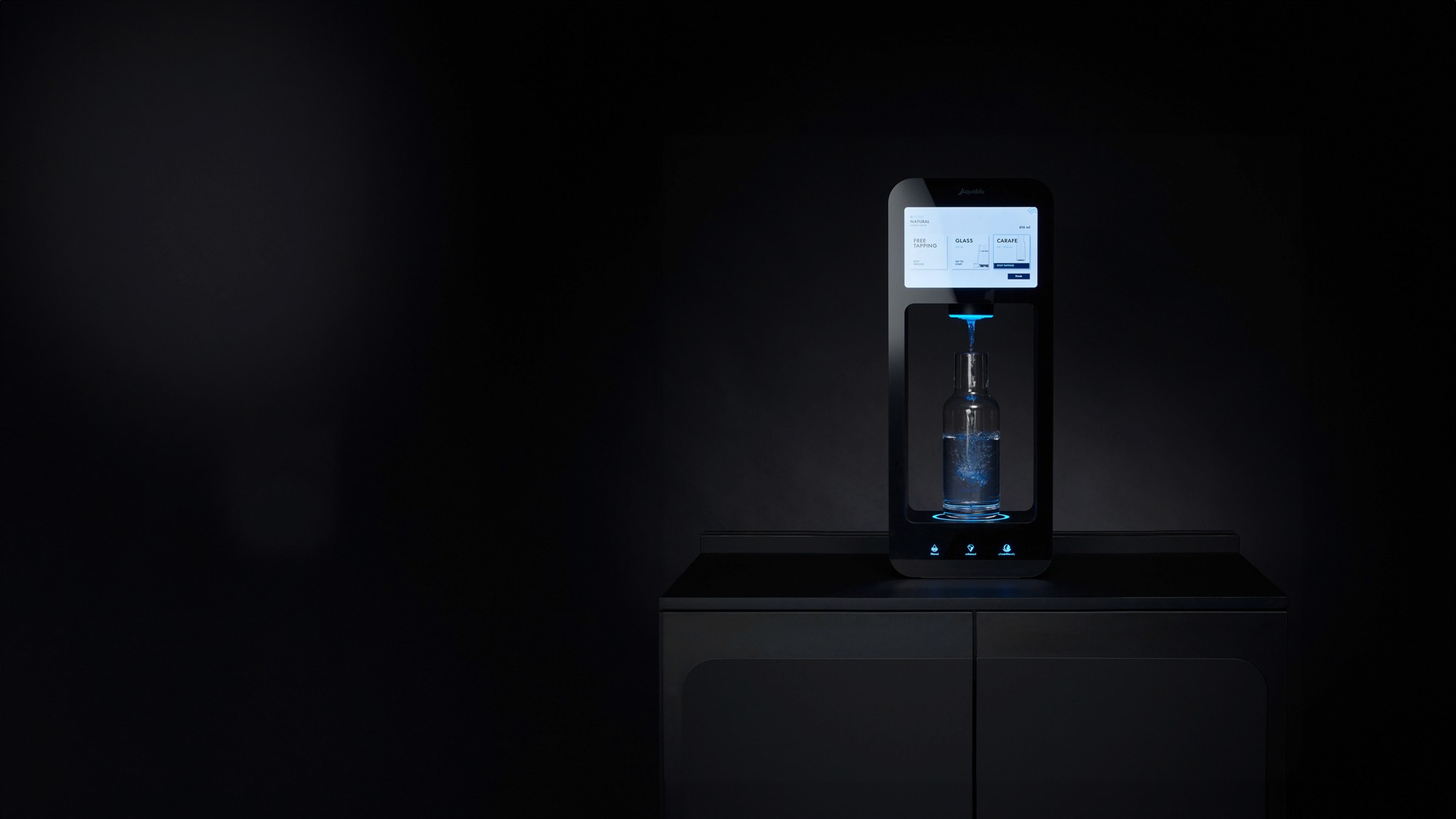
A mains-fed dispenser removes the logistics. REFILL+ Series 2 for offices goes further.

Beyond the basics

With REFILL+ Series 2

Impact reporting

AURA tracks usage, CO₂ saved and plastic avoided in real time — so you can actually report your impact, not estimate it

Drink variety

Still, sparkling, chilled and hot, plus 60+ vitamin-enriched flavours — replaces the canned and bottled drinks in the office fridge, not just the water

Water quality

Advanced filtration removes bacteria and microplastics

For smaller offices or temporary workplaces, bottled delivery can still be the simplest solution. If your team is growing or you're managing regular deliveries each month, a mains-fed system often reduces both the ongoing costs and the administration involved.

One concern remains for many organisations: installation.

What Does Installation Involve?

Many facilities managers assume replacing a bottled water cooler means building work, major plumbing or days of disruption. In practice, installation is usually much simpler.

Aquablu's service engineer Rob Egbers has completed more than 150 REFILL+ installations and explains what's typically required:

"All we need for installation is a water tap, power supply, drainage and sufficient cabinet space. If there's no drainage available, we can offer a Smart Jerrycan to collect the waste water instead.

We also drill a hole in the countertop for the dispenser, and if any additional holes are needed between cabinets, that may add a little time.

Installation usually takes between two and two-and-a-half hours. Afterwards, we provide a short training session covering everything from changing flavours and replacing CO₂ cylinders to routine maintenance.

It's always fun to see people's reactions during the onboarding. At first they think, 'It's just water, how special can it be?' Then they try it and tell us they never want to leave the office. They're drinking more water than before, and the system quickly becomes part of their daily routine."

For most offices, the switch is a one-off installation that replaces an ongoing cycle of deliveries, bottle storage and stock management. Once connected, there's no need to schedule bottle deliveries or worry about running out of water before the next shipment.

See how REFILL+ Series 2 works for offices

Beyond Cost: What Changes Day to Day?

For many organisations, the biggest benefit of switching isn't the water itself. It's everything that disappears around it.

There's no delivery schedule to manage, no storage area filled with full and empty bottles, and no last-minute orders because demand was higher than expected. Your team simply has access to filtered water whenever they need it.

For office managers and facilities teams, that often means fewer recurring administrative tasks. For employees, it means one less interruption to the working day.

The environmental impact changes too.

Replacing bottled water delivery with a mains-fed system removes the need to transport, store and replace large plastic bottles throughout the year. While the exact reduction depends on your office size and water consumption, fewer deliveries also mean fewer transport miles and less packaging entering your workplace.

For many businesses, those operational improvements are just as valuable as the financial savings.

Is It Time to Replace Your Bottled Water Cooler?

If bottled water still works for your office and you're happy with plain water only, then no need to make a switch.

But if you're managing regular deliveries, running out of water between orders, finding that storage and administration are becoming part of the job or just want more flavour variety for your team, it's probably worth comparing the numbers.

For many organisations, the decision isn't about just buying a better water dispenser. It's about removing an ongoing operational cost that's grown with the business.

The easiest way to find out is to calculate your current costs and compare them with a mains-fed system based on your office size and water consumption.

Ready to Compare?

Run the numbers for your office in under a minute.

Calculate your savings

Want to explore the system first?

Explore how REFILL+ Series 2 works for offices

Prefer to speak with someone?

Request a tailored quote


When Does It Make Sense to Switch?

A small team with low water consumption may find bottled delivery perfectly practical. There's no installation, no connection to the mains, and little day-to-day management.

As offices grow, though, the economics start to change.

More employees means more bottles arriving each month, more storage space, more deliveries to coordinate, and more time spent checking stock and replacing empty bottles. These aren't dramatic costs on their own, but they increase alongside your headcount.

For many organisations, the tipping point comes somewhere between 25 and 50 employees. Above that, the ongoing cost of bottled delivery often exceeds the cost of a mains-fed water dispenser over its lifetime.

That doesn't mean every office should switch. If your organisation has fewer than around 25 employees, uses relatively little water or operates from temporary premises, bottled delivery may still be the simpler and more cost-effective option.

The only reliable way to know is to compare your current costs with the cost of a mains-fed system using your own office size and water consumption. If you're still weighing up different dispenser types, our guide to choosing the best office water dispenser explains when bottled, plumbed-in and integrated systems make the most sense.

Compare the costs

Bottled Water Cooler vs Mains-Fed Water Dispenser

Both bottled water coolers and mains-fed water dispensers provide drinking water for your team. The core difference is how they're managed behind the scenes.

Bottled Water Cooler

Mains-Fed Water Dispenser

Requires regular bottle deliveries

Connected directly to your mains water supply

Storage space needed for full and empty bottles

No bottle storage required

Someone needs to monitor stock and place orders

No reordering or delivery schedules

Can run out if deliveries are delayed or demand increases

Continuous supply of filtered water

Quick to install with no plumbing

Typically installed in 2 to 2.5 hours

Often suits smaller or temporary workplaces

Often becomes more cost-effective as offices grow

What the Aquablu REFILL+ Series 2 adds

A mains-fed dispenser removes the logistics. REFILL+ Series 2 for offices goes further.

Beyond the basics

With REFILL+ Series 2

Impact reporting

AURA tracks usage, CO₂ saved and plastic avoided in real time — so you can actually report your impact, not estimate it

Drink variety

Still, sparkling, chilled and hot, plus 60+ vitamin-enriched flavours — replaces the canned and bottled drinks in the office fridge, not just the water

Water quality

Advanced filtration removes bacteria and microplastics

For smaller offices or temporary workplaces, bottled delivery can still be the simplest solution. If your team is growing or you're managing regular deliveries each month, a mains-fed system often reduces both the ongoing costs and the administration involved.

One concern remains for many organisations: installation.

What Does Installation Involve?

Many facilities managers assume replacing a bottled water cooler means building work, major plumbing or days of disruption. In practice, installation is usually much simpler.

Aquablu's service engineer Rob Egbers has completed more than 150 REFILL+ installations and explains what's typically required:

"All we need for installation is a water tap, power supply, drainage and sufficient cabinet space. If there's no drainage available, we can offer a Smart Jerrycan to collect the waste water instead.

We also drill a hole in the countertop for the dispenser, and if any additional holes are needed between cabinets, that may add a little time.

Installation usually takes between two and two-and-a-half hours. Afterwards, we provide a short training session covering everything from changing flavours and replacing CO₂ cylinders to routine maintenance.

It's always fun to see people's reactions during the onboarding. At first they think, 'It's just water, how special can it be?' Then they try it and tell us they never want to leave the office. They're drinking more water than before, and the system quickly becomes part of their daily routine."

For most offices, the switch is a one-off installation that replaces an ongoing cycle of deliveries, bottle storage and stock management. Once connected, there's no need to schedule bottle deliveries or worry about running out of water before the next shipment.

See how REFILL+ Series 2 works for offices

Beyond Cost: What Changes Day to Day?

For many organisations, the biggest benefit of switching isn't the water itself. It's everything that disappears around it.

There's no delivery schedule to manage, no storage area filled with full and empty bottles, and no last-minute orders because demand was higher than expected. Your team simply has access to filtered water whenever they need it.

For office managers and facilities teams, that often means fewer recurring administrative tasks. For employees, it means one less interruption to the working day.

The environmental impact changes too.

Replacing bottled water delivery with a mains-fed system removes the need to transport, store and replace large plastic bottles throughout the year. While the exact reduction depends on your office size and water consumption, fewer deliveries also mean fewer transport miles and less packaging entering your workplace.

For many businesses, those operational improvements are just as valuable as the financial savings.

Is It Time to Replace Your Bottled Water Cooler?

If bottled water still works for your office and you're happy with plain water only, then no need to make a switch.

But if you're managing regular deliveries, running out of water between orders, finding that storage and administration are becoming part of the job or just want more flavour variety for your team, it's probably worth comparing the numbers.

For many organisations, the decision isn't about just buying a better water dispenser. It's about removing an ongoing operational cost that's grown with the business.

The easiest way to find out is to calculate your current costs and compare them with a mains-fed system based on your office size and water consumption.

Ready to Compare?

Run the numbers for your office in under a minute.

Calculate your savings

Want to explore the system first?

Explore how REFILL+ Series 2 works for offices

Prefer to speak with someone?

Request a tailored quote

FAQs

01

Is a bottled water cooler or a mains-fed water dispenser better for an office?

Neither option is better for every workplace. Bottled water coolers are often the simplest choice for smaller offices or temporary locations because they don't require installation. As your team grows, a mains-fed water dispenser usually becomes more practical by removing bottle deliveries, storage requirements and ongoing administration. The right choice depends on your office size, water consumption and long-term operating costs.

02

At what office size should you switch from bottled water?

There's no fixed threshold, but many organisations start comparing alternatives once they have around 25 to 50 employees. At that point, the cost of bottled water delivery, storage and administration often outweighs the cost of a mains-fed system. The best way to decide is to compare the total annual cost for your own workplace rather than looking at the price per bottle.

03

How long does it take to install a mains-fed water dispenser?

A typical installation takes around 2 to 2.5 hours. Most installations require access to a water supply, power and drainage, along with sufficient cabinet space. Once installed, there's no need to manage bottle deliveries or store full and empty water bottles.

by

Tori Wilson, Content Marketing Manager @Aquablu

Tori Wilson, Content Marketing Manager @Aquablu

/

Ready to upgrade your hydration?

join the club

Ready to upgrade your hydration?

join the club

Ready to upgrade your hydration?

join the club