PLASTIC-FREE HYDRATION AT THE OFFICE: WHY IT'S AN EDGE

Plastic bottles still dominate office hydration, and the cost goes well beyond the planet. Here's what's pushing facility teams to rethink the water on the counter.
Most offices still hydrate the same way they did a decade ago: cases of bottled water in the kitchen, plastic jugs on the cooler, a delivery van pulling up every other Tuesday. The setup feels normal, until you look at what it's costing the business, the team, and the planet.
Plastic-free office hydration has stopped being a values-only exercise. It's a question of operations, budget, and what employees actually want from the spaces they work in.
Why companies are stepping away from bottled water at the office
The case against bottled water at work doesn't start with the environment. It starts with logistics.
Every case of bottled water means an order, a delivery slot, storage somewhere it doesn't belong, and waste that someone has to manage. Multiply that by a few hundred employees and the operational picture gets messy fast: stacked pallets in corridors, full bins by Wednesday, and a facility budget line that only ever moves up.
The friction shows up in three places facility and HR teams notice:
Procurement and logistics. Recurring orders, delivery windows, storage space, supplier coordination. None of it adds value to the workday.
Waste and recycling costs. Even when bottles are recycled, the company pays to manage the volume. Most are not.
Inconsistent access. When stock runs low or a delivery slips, the team is back to lukewarm tap water in mismatched mugs.
Bottleless setups cut those moving parts. Water comes out of the wall, filtered, on demand, and the vendor van stops showing up. The broader office waste line gets shorter at the same time.
The environmental case still matters
The operational story doesn't replace the environmental one, it sharpens it.
Globally, we go through more than 500 billion plastic bottles every year [1]. The recycling rate sits below 10% worldwide [2], so the rest end up in landfill, incinerators, or the ocean. Producing the bottles takes around three liters of water for every liter you drink, plus the diesel to truck them across the country [3].
Across the EU, the Single-Use Plastics Directive is steadily tightening what's allowed in offices and event spaces. The regulatory pressure is only moving in one direction.
For an office buying its way through that cycle every month, the environmental footprint is direct, traceable, and increasingly visible to anyone reading a sustainability report.
Plastic-free hydration: myths and facts
There's still confusion about bottled water, tap water, and what "plastic-free" actually means at work. A few of the ones we hear most:
Myth | Fact |
Bottled water is safer than tap water | In most European markets, bottled water is filtered tap water with weaker testing requirements than the public supply. It can also pick up microplastics from the packaging. |
Recycling solves the plastic problem | Less than 10% of plastic gets recycled globally. The rest goes to landfill, incineration, or escapes into the environment. |
Plastic-free is expensive and complicated | Switching to a mains-connected dispenser and reusable bottles is a one-time shift, and the costs come down month after month. |
Plastic jugs on water coolers are sustainable | Still plastic. Still trucked, stored, swapped, and discarded. The footprint is hidden, not removed. |
Employees don't notice how water is served | They notice. Especially newer hires, who read the room for whether sustainability claims show up in the kitchen. |
The benefits of plastic-free hydration for businesses
Plastic-free office hydration earns its place because it pays back across three lines at once.
Sustainability that's measurable. A bottleless system gives facility and ESG teams a clean number to report. Bottles avoided, kilograms of plastic kept out of waste, kilometers of delivery trucks taken off the road. Sustainability stops being a slogan in the All Hands deck and becomes a figure in a report.
Costs that come down, not up. Bottled water is a recurring line: orders, deliveries, storage, waste pickup. A mains-connected setup replaces the recurring spend with a predictable subscription, and the math gets better as the team grows.
A workplace people actually drink at. Filtered, chilled, sometimes sparkling water on the counter shifts behavior. People drink more, refill personal bottles, and stop reaching for the cans in the fridge. The hydration habit you want from a wellbeing program already lives in the kitchen, and the impact on retention and satisfaction shows up faster than most teams expect. It's why workplace vitality starts here.
The combination is what makes this an easy yes. Sustainability without a cost penalty. Cost savings without a wellbeing trade-off.
How offices can switch to plastic-free hydration
Going plastic-free isn't one decision. It's three small ones, in roughly this order.
1. Replace bottled water with a mains-connected dispenser. A filtered, tap-connected system is the single biggest lever. It cuts deliveries, frees up storage, and gives the team filtered still and sparkling water without the plastic. Our guide to choosing a workplace water dispenser walks through the trade-offs by office size.
2. Roll out reusable bottles and refill stations. A reusable bottle for every employee, plus refill points around the office and meeting rooms, makes the new setup the default. The desk plastic fades on its own.
3. Cut the rest. Plastic cups in the canteen, sachets in meeting rooms, single-use bottles in event packs. Once the main setup is sorted, the smaller plastic habits are easier to spot. For where the spend currently goes, the breakdown of bottled vs canned vs dispensed water is a useful reference.
What bottleless infrastructure looks like
A bottleless workplace doesn't mean a basic tap. It means infrastructure: filtration, chilling, carbonation, and a refill experience the team is happy to walk to.
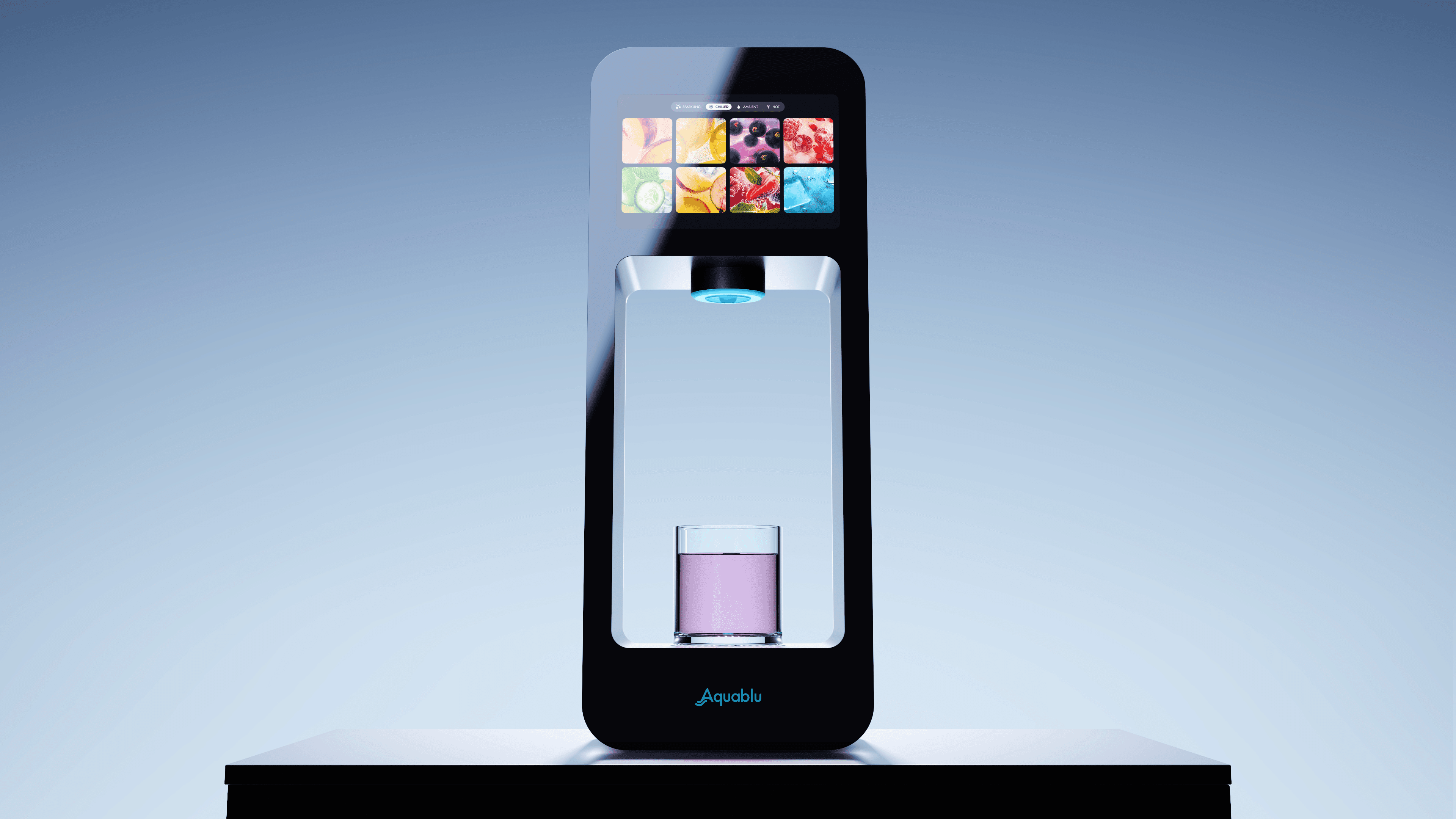
REFILL+ Series 2 is one example. It connects to the mains, filters water through a Nano-Silver Filtration system, adds back minerals, and pours it still, sparkling, or with functional flavors. No bottles, no jugs, no delivery schedule. The team gets better water than the bottled version, and facility gets a setup that runs in the background.
Other models work too: countertop filters for small offices, plumbed dispensers for larger sites, refill stations near meeting clusters. The pattern is the same. Water comes from the building, not from a truck.
The shift is already happening
Plastic-free hydration is moving from "nice initiative" to "default office spec." Sustainability teams want the data. Finance teams want the math. Employees want hydration that tastes good and does more for their day.
The offices putting it in place now aren't adding a 'nice to have'. They're doing the obvious thing earlier than the rest.
SOURCES
[1] Earth Day Network, "Fact Sheet: Single Use Plastics," 2024. [2] OECD, "Global Plastics Outlook," 2022. [3] Pacific Institute, "Bottled Water and Energy: A Fact Sheet," 2007.
FAQs
01
How much does plastic-free office hydration cost compared to bottled water?
For most offices, a mains-connected dispenser costs less than bottled water within the first year. Bottled setups carry recurring spend across orders, deliveries, storage, and waste pickup, and the line moves up as the team grows. A filtered dispenser replaces that with a predictable monthly subscription that stays flat regardless of how much the team drinks. The bigger the office, the faster the math tips.
02
Will employees actually drink more water from a bottleless dispenser?
Yes, and the shift shows up quickly. Filtered still and sparkling water on the counter changes what people reach for, especially when refill points sit near desks and meeting rooms. Teams that switch typically see higher daily water intake, fewer cans and bottled drinks in the fridge, and reusable bottles on most desks within a few weeks. Hydration stops being a wellbeing initiative and becomes the path of least resistance.
03
What do we do with the bottled water contract we already have?
Most bottled water contracts run month-to-month or on short rolling terms, so the switch rarely needs to wait. The cleanest sequence is to install the dispenser first, run both setups for two to four weeks while the team adjusts, then cancel the bottled delivery once reusable bottles and refill habits are in place. Facility teams usually find the storage space and waste pickup savings show up before the first invoice cycle closes.
04
More stories
Keep up with the latest articles written about Aquablu