English

MENU

English

MENU

English

MENU

English

MENU

YOUR NEXT HIRE WANTS MORE THAN A COFFEE MACHINE: HERE'S WHAT'S CHANGED

YOUR NEXT HIRE WANTS MORE THAN A COFFEE MACHINE: HERE'S WHAT'S CHANGED

5 min

5 min

|

|

5 min

|

A coffee machine is no longer cutting it for the next generation of office workers. Here's why a smart water dispenser should be your next move.

The coffee machine used to be the unquestioned centerpiece of every office kitchen. Now, employee drinking habits say that's shifting. Across Europe, facility managers are rethinking workplace beverage infrastructure. Office water dispensers and smart hydration solutions are taking up more counter space than ever before. Not because coffee disappeared, but because what employees expect from their workplace changed.

Hydration, wellbeing, and sustainability moved from HR talking points to line items in facility budgets. And when you look at the numbers, the case for water over coffee gets hard to ignore.

Key Conclusions and Coffee Statistics


  • Most of your team is under-hydrated, and it's costing up to 12% in cognitive performance

  • Coffee worsens dehydration

  • Proper hydration is linked to a 14% productivity gain

  • Gen Z isn't reaching for the coffee machine. 65% want functional benefits from what they drink

  • Coffee infrastructure costs €70–€160 per employee per year. A tap-connected water dispenser cuts that significantly

  • One water dispenser replaces a patchwork of bottles, cans, and suppliers

THE NUMBERS BEHIND THE SHIFT

The generation now entering the workforce in the largest numbers is already choosing differently. Only 26% of Gen Z drinks coffee daily [1], compared to significantly higher rates among Millennials and Gen X. And when they do drink it, they want it to do more: 65% of Gen Z coffee drinkers prefer beverages with functional benefits [2] like cognitive support, immunity, or stress relief over plain caffeine. Half of Gen Z has replaced caffeinated or sugary drinks with functional alternatives altogether [3]. The demand isn't disappearing. It's shifting toward drinks that do something specific and hydrating flavors that fight fatigue.

Water vs Coffee: Which Is Better for Vitality and Productivity?

Break it down by what matters to a modern office, and the reason for the shift becomes clear.

Why People Drink Coffee Out of Habit

Up to 80% of the workforce is chronically under-hydrated on any given day [4]. That matters because even 1% dehydration reduces cognitive performance by up to 12% [5]. Coffee, the default office drink, compounds the problem: caffeine is a mild diuretic, and three cups a day without matching water intake pushes hydration further in the wrong direction. Add the sugar, milk, and syrups in most office coffee drinks and you're also adding calories without nutritional benefit. A standard cappuccino with whole milk contains around 39 calories, 2.9g of fat, and 2.9g of carbohydrates per cup. Water contains zero.

Drinking more than two or three cups a day can increase anxiety, disrupt sleep, and cause headaches on days when consumption drops. For most office workers, the afternoon slump they're solving with a fourth coffee would respond better to a glass of water.

Modern water dispensers go further than plain tap water. Filtered water with functional additions like vitamins, electrolytes, or natural flavors gives employees a reason to reach for water instead of defaulting to the coffee machine. People choose based on what they need in the moment: focus, immunity, energy. That's a different relationship with hydration than filling a mug just to bulldoze through the grind.

The Benefits of Water for Health and Productivity

Staying hydrated has a direct, measurable impact on how people work. A University of East London study found that drinking water increased productivity by 14% [6]. At just 3% dehydration, reaction time slows to the equivalent of a 0.08% blood alcohol level. For a team of 50, closing that hydration gap is the equivalent output of seven additional employees, without hiring anyone.

Coffee gives a short spike, then a crash. A meta-analysis found that high caffeine intake, 400mg+ per day or roughly four cups, significantly increases the risk of anxiety [7], undermining the focus that sustained productivity requires. For facility managers weighing which infrastructure supports performance across a full workday, the math favors water.

The Environmental Impact of Coffee in the Workplace

Coffee infrastructure is expensive in ways that don't always show up on one invoice. Beans, milk, sugar, cups, stirrers, machine maintenance, descaling, service contracts. Industry benchmarks put the cost of office coffee service at €70–€160 per employee per year [8]. For a mid-sized office of 50, that's €3,500–€8,000 annually on coffee supplies alone, before you account for the machine lease or purchase.

A water dispenser connected to the existing tap water line strips out most of those recurring costs. No beans, no milk, no stirrers, no descaling. The ongoing cost is limited to periodic filter replacements and flavor refills. For the same office of 50, total beverage infrastructure spend can drop by half or more, while serving a wider range of what employees are already reaching for.

Can Coffee Become More Sustainable?

Coffee has a long supply chain: farming, processing, international shipping, packaging. Every kilogram of roasted coffee generates roughly 15kg of CO₂ before it reaches your office.

A water dispenser connected to the tap shortens that chain dramatically. No bean shipments, no milk deliveries, no daily packaging waste. The supply footprint shrinks to periodic filter replacements and flavor refills. It also reduces the need for multiple systems: no bottles, no cans, no plastic. One tap point replaces a patchwork of suppliers and waste streams. For organizations reporting on sustainability targets, that's a measurable difference from a single infrastructure decision.

The goal isn't to ban coffee. It's to rebalance the default. When the easiest option in the kitchen is filtered water with flavors people enjoy, consumption patterns shift on their own.

The Effect of Coffee on Health

The coffee machine has long been the social hub of the office. But that's about location and ritual, not about coffee specifically. A well-placed office water cooler creates the same effect: people gather, pause, and talk. The benefits of a water cooler in the office go beyond hydration: they walk away refreshed rather than wired.

"Thanks to the Aquablu dispenser, we notice that people drink less coffee and more water. Individuals choose their preferred flavor and vitamin combination depending on their need-state. For example, when they need more focus or want to strengthen their immunity, they choose their drink accordingly." — Rob Jansen, CEO, Chain Logistics

When employees can personalize what they drink based on how they feel, the water point becomes more than a utility. It becomes part of how the office takes care of its people.

Conclusion: Time for a More Sustainable Drinking Choice

The shift from coffee-first to hydration-first offices isn't a fad. It tracks with broader moves toward employee wellbeing, lower operational costs, and measurable sustainability improvements. Facility managers who've made the switch report lower beverage spend, less waste, and teams that stay sharper through the afternoon.

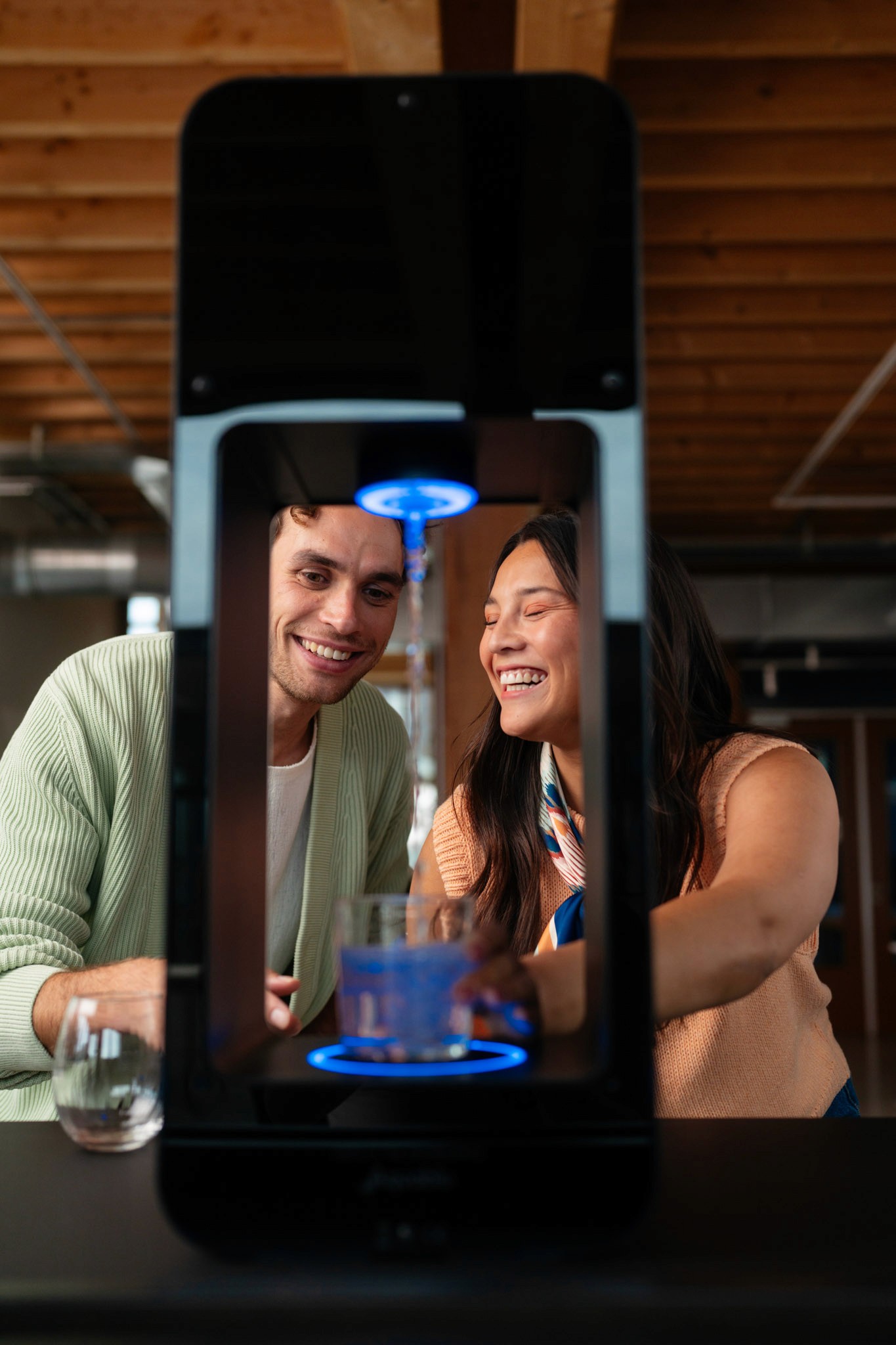
Water dispensers like REFILL+ Series 2 represent what this looks like in practice: filtered water from the tap, functional flavors, and a system designed for high-traffic office environments. No bottles. No pods. No waste. Just water that people choose to drink.

See how it works for your office →

SOURCES

[1] Gen Z coffee consumption in the U.S. — Statista [2] Gen Z demands functional benefits in coffee and tea — Food Navigator USA [3] Gen Z beverage trends — Opeepl [4] The hidden cost of dehydration in the workplace — Quench/Culligan [5] Effectiveness of a water intake program at the workplace — National Library of Medicine [6] 14% faster: the truth about hydration — University of East London via Bevi [7] Caffeine intake and anxiety: a meta-analysis — PMC [8] How much does office coffee service cost? — 360Connect
THE NUMBERS BEHIND THE SHIFT

The generation now entering the workforce in the largest numbers is already choosing differently. Only 26% of Gen Z drinks coffee daily [1], compared to significantly higher rates among Millennials and Gen X. And when they do drink it, they want it to do more: 65% of Gen Z coffee drinkers prefer beverages with functional benefits [2] like cognitive support, immunity, or stress relief over plain caffeine. Half of Gen Z has replaced caffeinated or sugary drinks with functional alternatives altogether [3]. The demand isn't disappearing. It's shifting toward drinks that do something specific and hydrating flavors that fight fatigue.

Water vs Coffee: Which Is Better for Vitality and Productivity?

Break it down by what matters to a modern office, and the reason for the shift becomes clear.

Why People Drink Coffee Out of Habit

Up to 80% of the workforce is chronically under-hydrated on any given day [4]. That matters because even 1% dehydration reduces cognitive performance by up to 12% [5]. Coffee, the default office drink, compounds the problem: caffeine is a mild diuretic, and three cups a day without matching water intake pushes hydration further in the wrong direction. Add the sugar, milk, and syrups in most office coffee drinks and you're also adding calories without nutritional benefit. A standard cappuccino with whole milk contains around 39 calories, 2.9g of fat, and 2.9g of carbohydrates per cup. Water contains zero.

Drinking more than two or three cups a day can increase anxiety, disrupt sleep, and cause headaches on days when consumption drops. For most office workers, the afternoon slump they're solving with a fourth coffee would respond better to a glass of water.

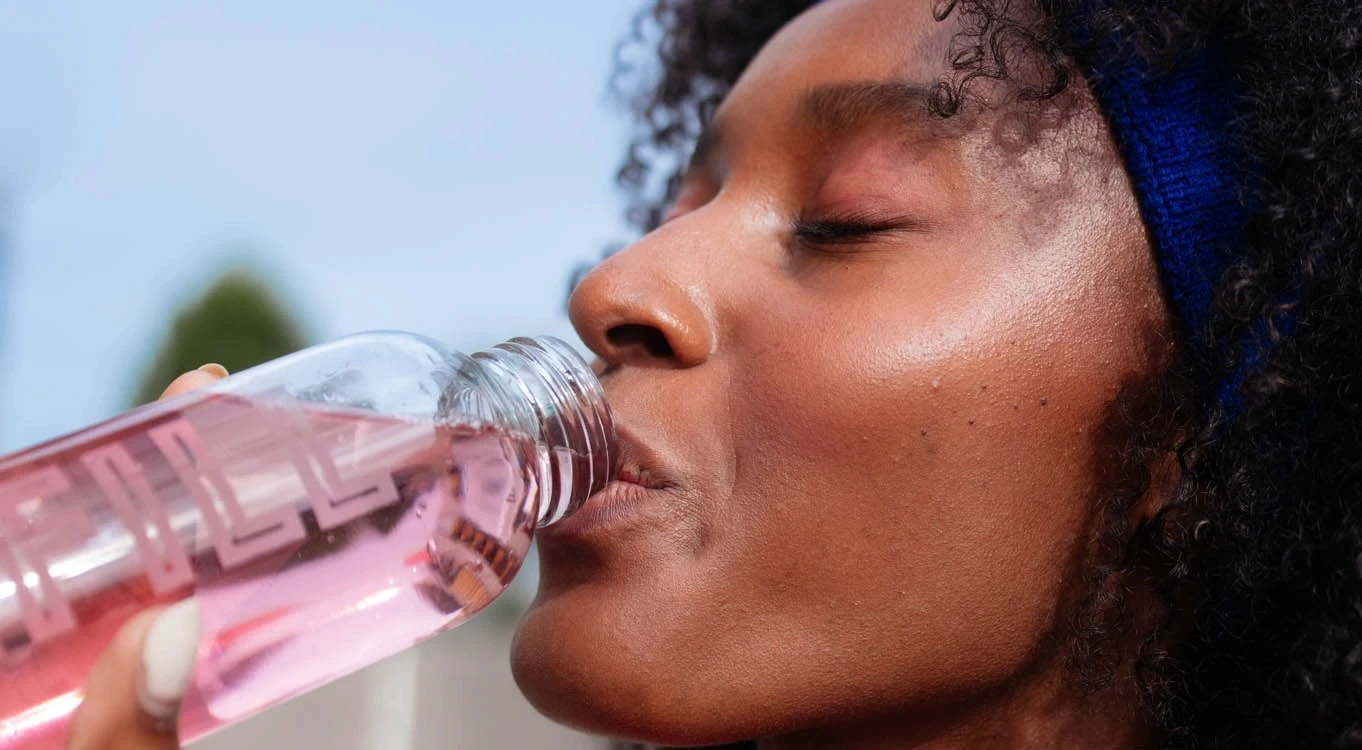
Modern water dispensers go further than plain tap water. Filtered water with functional additions like vitamins, electrolytes, or natural flavors gives employees a reason to reach for water instead of defaulting to the coffee machine. People choose based on what they need in the moment: focus, immunity, energy. That's a different relationship with hydration than filling a mug just to bulldoze through the grind.

The Benefits of Water for Health and Productivity

Staying hydrated has a direct, measurable impact on how people work. A University of East London study found that drinking water increased productivity by 14% [6]. At just 3% dehydration, reaction time slows to the equivalent of a 0.08% blood alcohol level. For a team of 50, closing that hydration gap is the equivalent output of seven additional employees, without hiring anyone.

Coffee gives a short spike, then a crash. A meta-analysis found that high caffeine intake, 400mg+ per day or roughly four cups, significantly increases the risk of anxiety [7], undermining the focus that sustained productivity requires. For facility managers weighing which infrastructure supports performance across a full workday, the math favors water.

The Environmental Impact of Coffee in the Workplace

Coffee infrastructure is expensive in ways that don't always show up on one invoice. Beans, milk, sugar, cups, stirrers, machine maintenance, descaling, service contracts. Industry benchmarks put the cost of office coffee service at €70–€160 per employee per year [8]. For a mid-sized office of 50, that's €3,500–€8,000 annually on coffee supplies alone, before you account for the machine lease or purchase.

A water dispenser connected to the existing tap water line strips out most of those recurring costs. No beans, no milk, no stirrers, no descaling. The ongoing cost is limited to periodic filter replacements and flavor refills. For the same office of 50, total beverage infrastructure spend can drop by half or more, while serving a wider range of what employees are already reaching for.

Can Coffee Become More Sustainable?

Coffee has a long supply chain: farming, processing, international shipping, packaging. Every kilogram of roasted coffee generates roughly 15kg of CO₂ before it reaches your office.

A water dispenser connected to the tap shortens that chain dramatically. No bean shipments, no milk deliveries, no daily packaging waste. The supply footprint shrinks to periodic filter replacements and flavor refills. It also reduces the need for multiple systems: no bottles, no cans, no plastic. One tap point replaces a patchwork of suppliers and waste streams. For organizations reporting on sustainability targets, that's a measurable difference from a single infrastructure decision.

The goal isn't to ban coffee. It's to rebalance the default. When the easiest option in the kitchen is filtered water with flavors people enjoy, consumption patterns shift on their own.

The Effect of Coffee on Health

The coffee machine has long been the social hub of the office. But that's about location and ritual, not about coffee specifically. A well-placed office water cooler creates the same effect: people gather, pause, and talk. The benefits of a water cooler in the office go beyond hydration: they walk away refreshed rather than wired.

"Thanks to the Aquablu dispenser, we notice that people drink less coffee and more water. Individuals choose their preferred flavor and vitamin combination depending on their need-state. For example, when they need more focus or want to strengthen their immunity, they choose their drink accordingly." — Rob Jansen, CEO, Chain Logistics

When employees can personalize what they drink based on how they feel, the water point becomes more than a utility. It becomes part of how the office takes care of its people.

Conclusion: Time for a More Sustainable Drinking Choice

The shift from coffee-first to hydration-first offices isn't a fad. It tracks with broader moves toward employee wellbeing, lower operational costs, and measurable sustainability improvements. Facility managers who've made the switch report lower beverage spend, less waste, and teams that stay sharper through the afternoon.

Water dispensers like REFILL+ Series 2 represent what this looks like in practice: filtered water from the tap, functional flavors, and a system designed for high-traffic office environments. No bottles. No pods. No waste. Just water that people choose to drink.

See how it works for your office →

SOURCES

[1] Gen Z coffee consumption in the U.S. — Statista [2] Gen Z demands functional benefits in coffee and tea — Food Navigator USA [3] Gen Z beverage trends — Opeepl [4] The hidden cost of dehydration in the workplace — Quench/Culligan [5] Effectiveness of a water intake program at the workplace — National Library of Medicine [6] 14% faster: the truth about hydration — University of East London via Bevi [7] Caffeine intake and anxiety: a meta-analysis — PMC [8] How much does office coffee service cost? — 360Connect

FAQ

01

Is it worth getting a water dispenser for the office?

In modern offices where vitality, sustainability, and cost control converge, a water dispenser is a strong investment. It reduces dependence on bottled water, cuts waste, and promotes healthy drinking habits. Advanced systems like the Aquablu REFILL+ deliver filtered, chilled, sparkling, and functional water, making them a full alternative to traditional coffee machines.

02

What are the drawbacks of a water dispenser?

The main considerations are maintenance and initial investment. Modern water dispensers require periodic filter maintenance to guarantee water quality. Compared to the logistics around bottled water or capsule-based coffee machines, however, operational costs are often lower and more predictable.

03

Is it cheaper to buy bottled water or have a water dispenser?

Over the long term, a mains-connected water dispenser is almost always cheaper than purchasing bottled water regularly. Bottled water carries additional costs for storage, transport, waste processing, and deposit administration. A centralized solution like REFILL+ reduces these hidden costs and makes budgeting simpler for facilities management.

04

How long does a water dispenser typically last?

A professional water dispenser for office environments typically lasts 5 to 10 years, depending on usage and maintenance. High-quality systems with a service contract often deliver longer lifespan and stable performance, which matters for intensive use in mid-sized and large organizations.

by

Tori Wilson

/

Ready to upgrade your hydration?

join the club

Ready to upgrade your hydration?

join the club

Ready to upgrade your hydration?

join the club