Why Workplace Hydration Matters More Than You Think
We spend endless hours talking about productivity hacks, time management, and workplace performance. But one of the most powerful factors is hiding in plain sight — or more accurately, sitting forgotten in a corner of your office.
Water.
Hydration isn't a nice-to-have. It shapes how people think, feel, and show up at work — and it's one of the quietest signals of how much a company actually cares about its people. In most offices, it's still an afterthought. That's a problem worth fixing.
The science is clear
Your brain is around 75 percent water — which means even a small dip in hydration has a measurable effect on performance. Research published in the European Journal of Clinical Nutrition found that just 1.36% fluid loss was enough to cause cognitive decline. You wouldn't even feel thirsty yet, but your focus would already be fading.
How does water affect your mood?
It's a fair question, and one people don't ask often enough. When you're tired, foggy, irritable, or overwhelmed, there's a good chance dehydration is playing a role — even before you feel thirsty.
Hydration helps regulate mood by minimizing the release of cortisol, your stress hormone. It sharpens cognitive clarity, reducing the fog and frustration that often accompany stress. It sustains energy levels, making it easier to stay present and engaged throughout the day. And it supports your nervous system, helping it recover from intense or emotional moments.
Studies back this up. Research published in The Journal of Nutrition found that mild dehydration in healthy young women led to adverse changes in mood — including reduced vigor, more fatigue, and difficulty concentrating — without necessarily showing up as a hard drop in cognitive test scores. A separate research summary from Hydration for Health notes that even dehydration levels below 2% of body mass can increase fatigue and alter mood, with a growing body of evidence that cognitive function is affected too.
When teams have easy access to hydration — especially water that actually tastes good — they're better equipped to handle pressure without becoming overwhelmed.
The wrong fix makes it worse
When people feel sluggish, the instinct is to reach for coffee, soda, or a sugary energy drink. These might offer a temporary lift, but they also bring spikes, crashes, and in some cases, more dehydration. You're not solving the problem — you're layering caffeine highs and lows on top of it.
Water gives the body what it actually needs to function, without the side effects. Promoting it as the default drink leads to steadier energy, better long-term habits, and fewer crashes across the day.
→ Flavor helps: Why Flavored Water is the Secret to Boosting Hydration at Work
Hydration as a source of comfort
Water isn't just functional — it can be emotional, too.
Holding a bottle or cup can offer grounding during a tense conversation. Taking a sip provides a natural pause when discussing something sensitive. Having something to do with your hands can make a difficult moment feel more manageable.
This shows up most in HR meetings, wellbeing check-ins, or return-to-work conversations. Offering hydration in these moments does more than quench thirst — it signals care, offers comfort, and creates a small but meaningful sense of safety.
Why most people don't drink enough
Office hydration is usually uninspiring: lukewarm tap water, stale bottles, nothing that makes anyone want to pause and take a sip. So people chase flavor and energy elsewhere, and the cycle continues.
The missing piece isn't just hydration — it's hydration people actually enjoy. When water is refreshing, varied, and easy to access, it stops feeling like a chore and starts feeling like a ritual.
A few practical ways to build it into the day:
Place water stations where people already gather.
Pair refill moments with natural break points, like a 3 PM reset.
Offer flavored options that still hydrate, without added sugar.
Make water visible, accessible, and appealing.
→ How to Encourage Employees to Drink More Water
It's also a culture signal — and it shows up in retention
Here's something that often gets overlooked: investing in something as seemingly simple as better water access says a lot about how a company values its people.
We often think of retention in terms of pay, promotions, or perks. But what really makes people stay is the feeling that their wellbeing is valued — not just in theory, but in the everyday. Hydration may seem like a small detail, but done right, it becomes a symbol that says: we're paying attention, and we want you to feel good here.
Case study: how hydration at Infinite Group contributed to a healthier, happier workplace
First impressions matter, too. When new hires see a well-placed hydration station with flavor options and easy access, it tells them something: wellbeing isn't a bonus here, it's part of the culture. Mention it on the office tour. Reference it in onboarding emails. Hydration becomes part of the office's identity — not just a perk, but a promise.
→ 5 Tips for Improving Employee Wellbeing
Hydration stations: more than just refills
When placed intentionally, hydration stations do more than encourage drinking water — they create natural break points in the day.
These stations become informal gathering spots. They give people a reason to step away from their desk, reset, or connect casually with a colleague. A brief chat while filling a bottle might be the moment someone chooses to open up, or it might simply ease the tension of a stressful day.
By embedding hydration into the flow of your workspace, you give people both physical and social permission to pause — and that pause is often exactly what wellbeing needs.
→ Why Every Office Needs a Hydration Station
The bottom line
If energy is your office's most valuable resource, water is the fuel. So much of what gets labeled "afternoon fatigue" is actually the slow drain of dehydration, flavor fatigue, and caffeine crashes — and so much of what gets labeled "low morale" is actually a workplace that hasn't shown people the small, thoughtful signals that it cares.
Fixing it doesn't require a big investment or a sweeping change — just a bit of intention, and the willingness to stop treating water as an afterthought. Low effort, high impact, and directly tied to how your team thinks, feels, performs, and decides whether to stay.
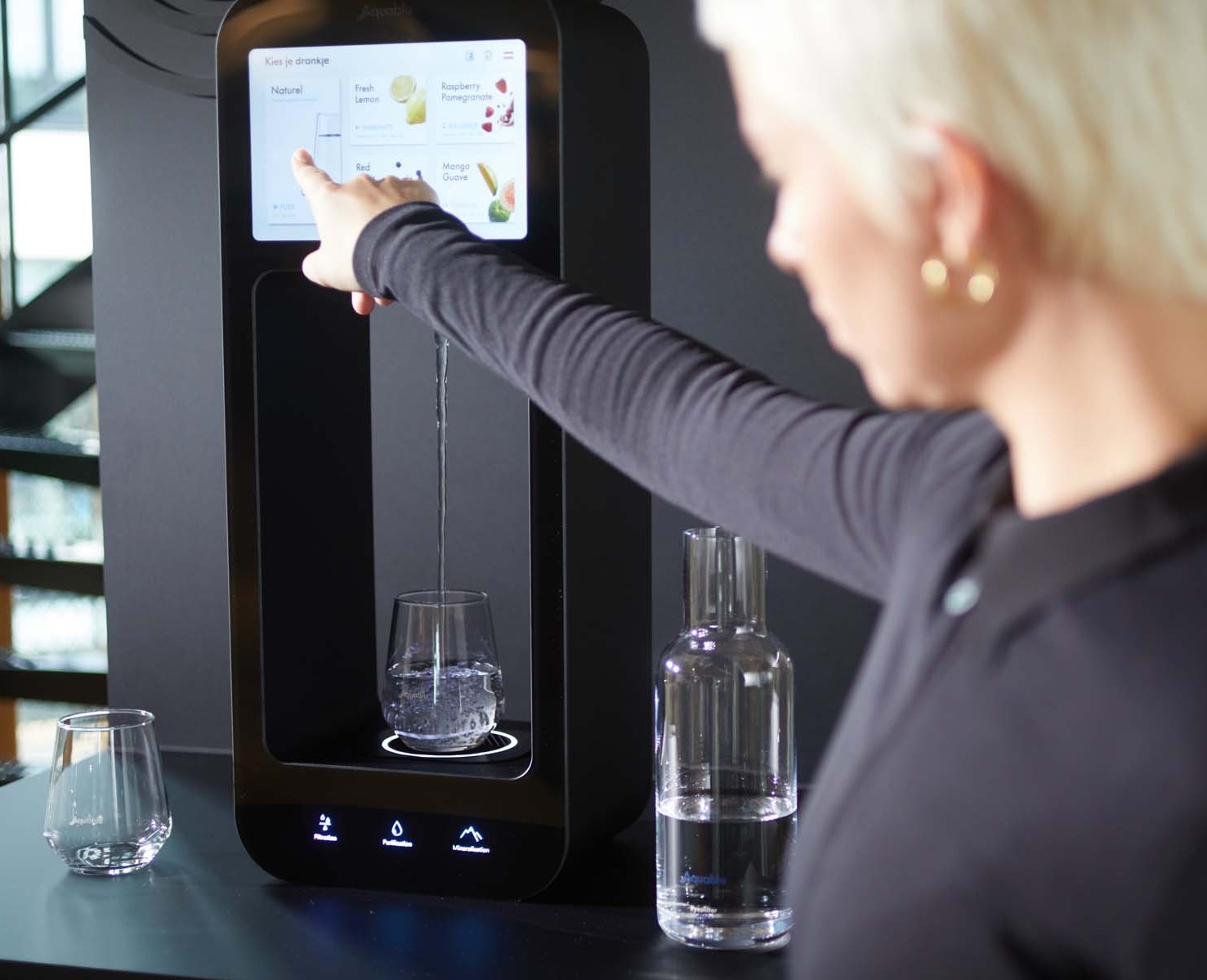
Discover Aquablu's award-winning hydration offering, the REFILL+
See how hydration fits your office cost and productivity goals
More stories
Keep up with the latest articles written about Aquablu