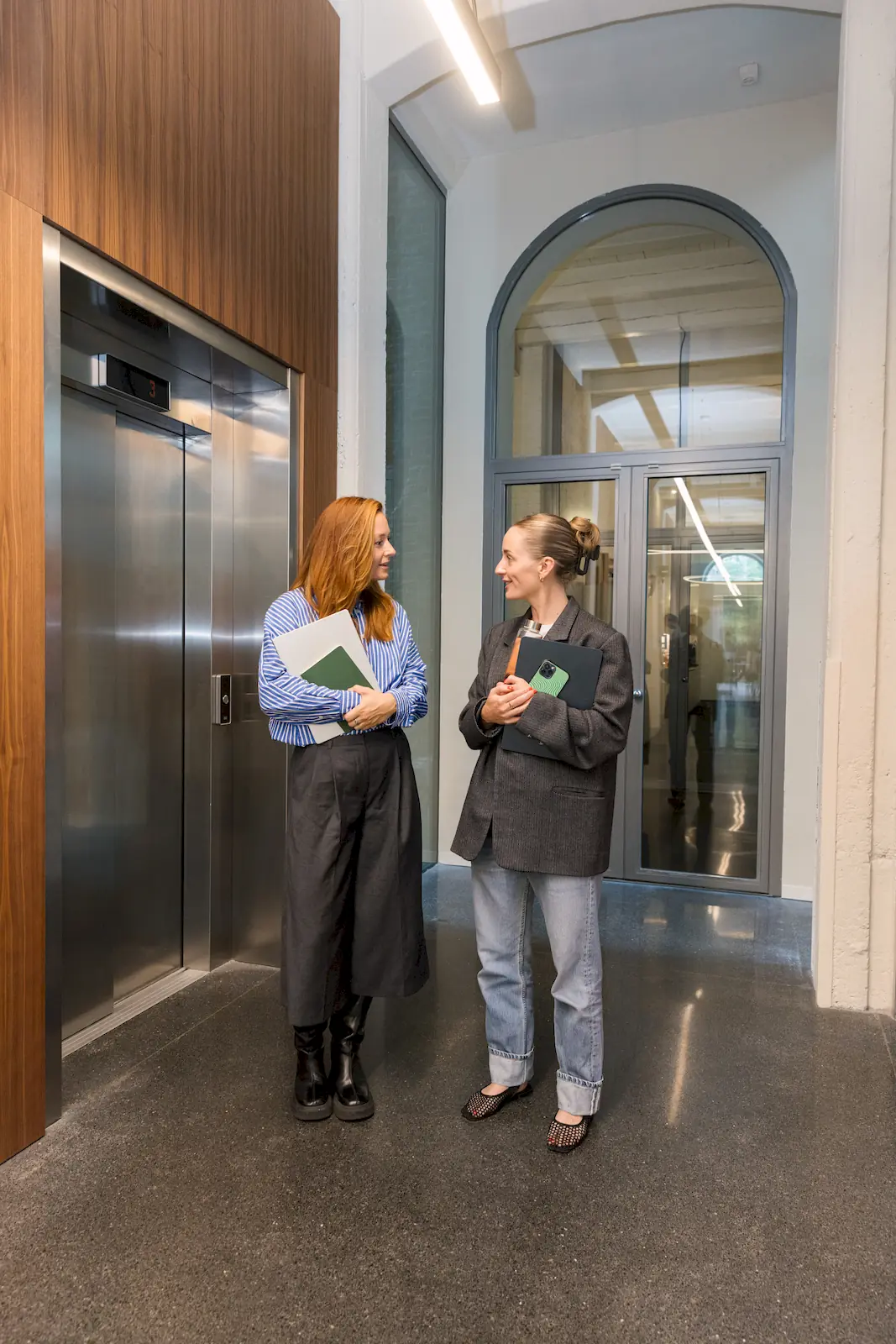
In conversation with Elmar: setting the compass
We speak with workplace strategist Elmar Wilens, founder of EWIP, about why the office has to work harder than ever to earn the commute, and what that means for a move.
Tell us about your work. What sort of problems do companies usually bring you when it comes to an office move?
Usually I come in when there's a big move or a wider transformation on the horizon, or one that's already started. Most organisations realise quite quickly that it's far more work than they expected, and that it touches everyone in the company. That's completely understandable. You only do this once every seven to ten years, and the people running it are doing so on top of their day jobs. So at some point they decide they'd like someone with more experience on board.
What makes getting the move right more critical now than ever?
Expectations have gone up. The office is now competing with a very comfortable setup at home, and people need a good reason to make the trip. There's also a real war for talent, especially in Amsterdam. I've seen it with law firms: candidates know exactly what each firm offers, right down to the atmosphere in the office, so you want to stand out.
Then there's the business side. An office is typically used four days out of seven, and on those days around 50% occupancy is a benchmark most companies are happy with. When you add that up, investing in a building and a fit-out is quite a leap of faith, so it deserves to be taken seriously.
How can offices become more attractive for teams?
The office should be identifiable with the company it represents, its values and its image. I don't think it's about luxury or perks, because perks are a neverending story. You can build an office like a very chic hotel and it'll be lovely, but it won't say anything about who you are.
If you work from home a lot, you only experience your company through a screen. When you walk into the office, you should recognise it straight away and feel, "ah, this is me, I belong to this team." That feeling doesn't come through a monitor. Getting there means making a real choice about what you stand for, and plenty of companies find that hard. But I'd say it's the best investment they can make.
Is defining client identity part of your job as a workplace strategist?
Yes, it's usually one of the first things I do. Sometimes I'm there from the start, sometimes I arrive when things are already slightly off the rails. Either way, I try to re-engage the compass.
Mostly that means asking a lot of questions. I often compare it to your own home: everyone would design theirs differently, and we wouldn't all like each other's taste. But an office has to be something everyone can get behind, so you look for the common ground and translate it into materials, colours and a way of working. Part of my job is also making sure the group is being honest with itself, because they'll be living with the result for years. You don't always make friends doing that, but it's worth it in the end.


How is the office landscape changing at present?
What I see is organisations really trying to get people back into the office. Covid showed us you can keep a business running from home, but very little new comes out of it. For that you need to be together, to feed off each other's energy, challenge each other and enjoy working together. People like being part of a herd, a familiar group.
You also hear people say the office is now just for meetings and the focused work happens at home. I don’t believe that. A lot of younger people find it hard to concentrate at home, and they want to feel part of a team. A good office lets people do their best work, it has to be a space where people perform too.
Any universal advice for "earning the commute" and getting people to actually use the office?
First, be careful about cutting square metres just because the space isn't being used. If the design doesn't work, people won't use it, and cutting back only makes that worse. If you offer four desks for every ten people, you're effectively telling six of them they're not welcome. People feel it.
Second, start with a conversation rather than a rule. A team manager might say, "We'd love to see everyone Monday, Wednesday and Friday. This is our floor, and that's when we do our teamwork." If people feel part of a group, they'll plan around it. It's also worth asking the ones who don't come in what's holding them back. Design plays its part, but it's really the strategy and the communication behind it that make the difference.
More resources

Previous article
Five rules for getting the space right
Twenty-five years and millions of square metres in, here are Martijn’s top lessons for planning a move - a quick map of what the rest of this guide unpacks.

Next article
Make It Theirs — Designing a Space Built for People
Aquablu speaks with Paula Sobów of Powerplant and Henk Schouten of Hospitality Group on how to design an office space teams think of as their own, and return to again and again.
Don't stop here
There's a lot more where this came from
You just read one article out of a whole edition, but the full edition is yours to download (for free)