Mysolution: fewer cans, healthier people, less waste
2
min read
As Mysolution grew, so did its cans, and the waste and work that came with them. That's what led Krista van Rijt to swap a fridge full of soda for built-in hydration: a healthier choice for her people, and for the environment.
At a glance
Company
Mysolution, a recruitment and staffing software company in Houten, near Utrecht; grew from around 40 to more than 200 people over a decade
Why a REFILL+ Series 2
A growing company meant a growing pile of cans: more waste, more work; cutting them was the healthier choice, for the team and the environment
The result
Roughly 500 cans a week at its peak down to 100, water intake up, and a space people genuinely enjoy
As Mysolution grew, so did its cans. Over the past decade the company has expanded from around 40 people to more than 200, spreading across two adjacent buildings near Utrecht, and every new hire meant more soda in the fridge, more deliveries, more packaging to deal with.
For Krista van Rijt, who leads the Office and Event Management team, that's what drove the change: she wanted to cut the cans, a healthier choice for her people and for the environment.
"It was because we had cans of soda in the fridge, which is bad for the environment, and it's a lot of work for us: the restocking, the buying, the recycling of it all," she says. "And I wanted to do something more environmentally friendly." As the company got bigger, she says, the cans only became more of a factor.
500 cans a week
At the peak, the numbers were striking. "At its peak, like 500 a week," Krista says.
That volume landed squarely on her team. Every can had to be ordered, hauled in, stocked, and its packaging dealt with afterwards. "Not necessarily my time," she says, "but my team's time, all the transporting of the cans back and forth." A recurring, invisible load that grew with every hire.
"At its peak, like 500 [cans] a week." — Krista van Rijt, Mysolution
Why built-in, not a cooler
When Krista looked for an alternative, an ordinary water cooler wasn't enough. She wanted one thing that did the whole job.
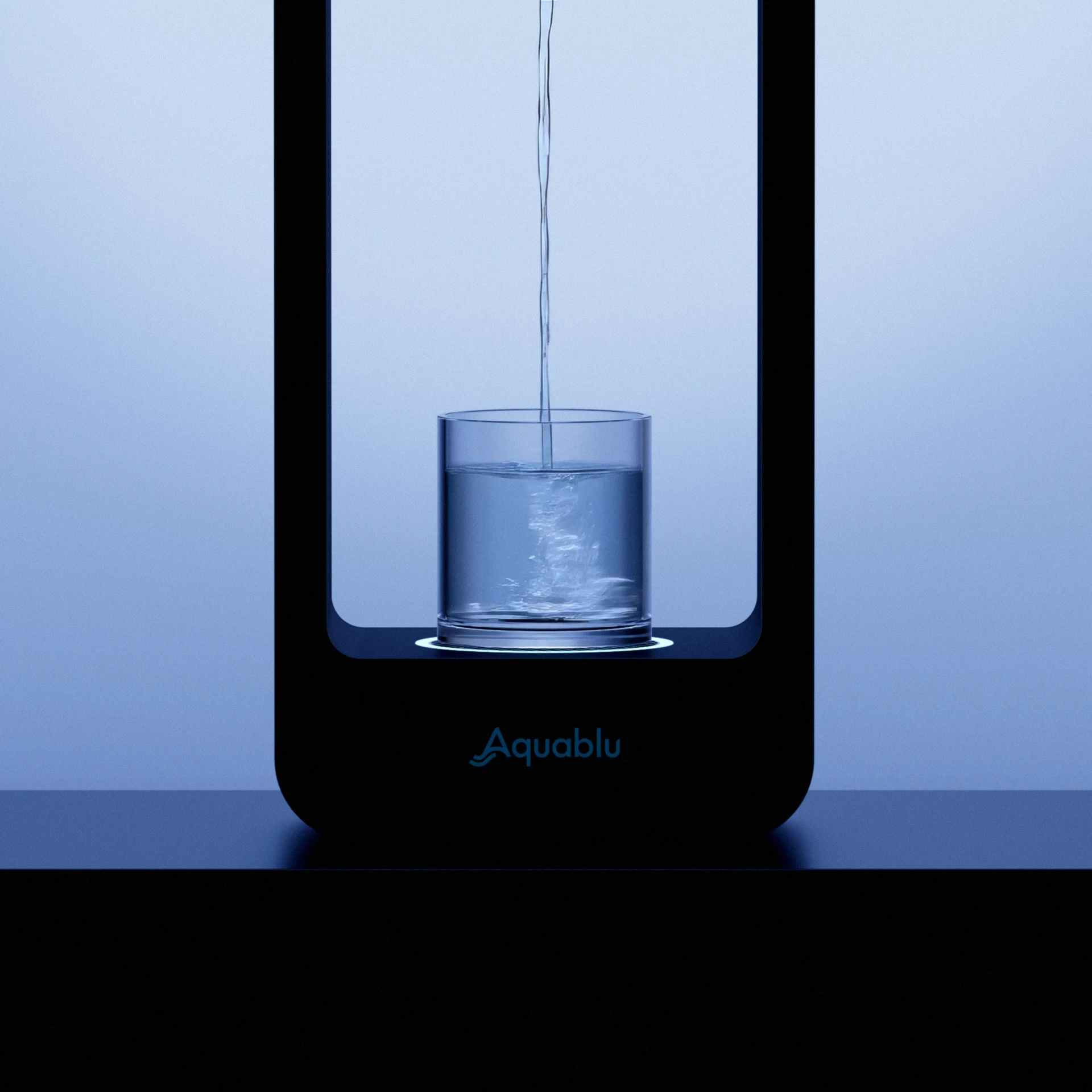
"Because of the flavours and the options," she says. "Our coffee supplier does have a water machine, but they have the syrup separate, and for me it was a big deal that with Aquablu it's one thing."
What appealed just as much was how little space it asked for, in an office where the one cafeteria already gets busy.
"The dispenser itself is very tiny. It fits right on the countertop. You don't need to open the cupboards beneath." And when she weighed it up, no single benefit had to carry the decision alone. "It's cost-effective, they have great taste, it's healthier, it's better for the environment, it's less work," she says. "So it's all of those things combined."
Healthier by default
The wellbeing side showed up fastest in Krista's own habits.
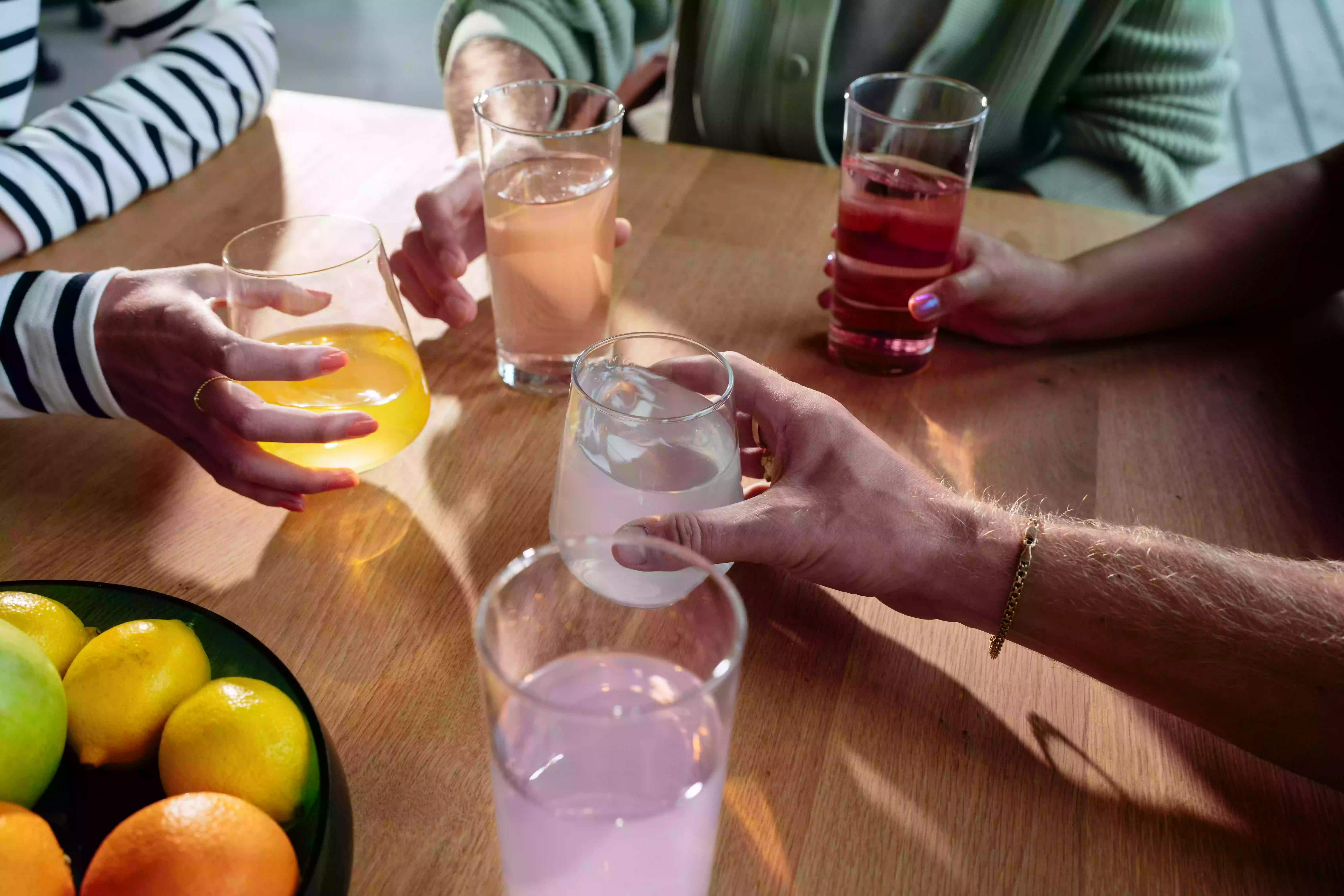
"I'm a big water drinker myself," she says, "and I think I've doubled my intake. It's just plain water, you get sick of that after a while, so this really, really helps." Swapping a wall of sugary cans for water with flavours made the healthy option the easy one, for everyone.
And the enthusiasm has lasted. "There isn't a day that goes by that there isn't someone who says, 'I like this so much,'" she says.
"There isn't a day that goes by that there isn't someone who says, 'I like this so much.'" — Krista van Rijt, Mysolution
Less waste, less work
The environmental goal that started it all has largely been met. The cans haven't fully vanished.
"We have some for the floors that are furthest away from the kitchen, and some for customer events, and we still have Coke," Krista says. "But the rest is all gone." What went with them was a steady stream of packaging and deliveries, and a chunk of her team's week.
"At this point," she says, "it's also making the office more engaging." It's the by-product of a decision made for the environment and for people's health, not for footfall.
The pull back to the office
Like a lot of companies, Mysolution is still coaxing people back in after years of hybrid working, and Krista sees the cafeteria doing quiet work there. It's where the whole company has lunch together, and where the Aquablu machine sits alongside the coffee machine and the snacks.
"It's literally a kitchen," she says, "but it's the kitchen of the house, the hub." Small draws matter, too. "An Aquablu machine helps, because they don't have one at home," she says.
"Lunch helps. And just planning small things in the office that are more fun when you're here than when you're not."
The result
What began as a way to cut cans has turned into something the office is built around.
The environmental win Krista wanted is real: most of the single-use gone, less waste, less hauling, and it came bundled with a healthier team and a busier, happier cafeteria.
When Aquablu first arrived and everyone got a taste, the reaction settled it for her on the spot. "I saw everyone in the office that day, 40 or 50 people, and I only heard positive things," she says.
"For me, that was it."