Tebi: reading the room, and building the healthy choice in
For Tebi's workplace experience manager, Stacy Bergener, a good office move begins by knowing your people and trusting your gut.
When Stacy Bergener joined Tebi, it had around 40 people. Within eight months the all-in-one hospitality platform provider had more than tripled, and growth had come with natural challenges. The company had spread from a few desks to three separate floors and the division was costing cohesion.
So they moved, with a simple goal: get everyone back onto one floor, visible to each other and able to connect. The new office was a turnkey space leased from another company; not a perfect fit but ready for Stacy to make Tebi's.


She started the process of making it their own by asking questions. "I met with the general managers and each department head to talk about what their teams need," she says, "then made sure that was all taken into consideration before we moved in."
But it’s also about understanding people, by observing. "I see it and I know what needs to be done based on how people behave," she says. At Tebi that meant designing around a coffee culture. "I know I've got my coffee connoisseurs, so I need at least two machines, two grinders, and counter space for their toastie machines."
At her last company, the same instinct had pointed somewhere else, "they needed a beer tap."
Different crowd, different answer, but the same discipline as the thread: work out who you're building for before you build it. "It really depends, you have to know your people: how they work, what they need, what they like."
For a company that builds tools for hospitality, one space mattered the most.
"In the kitchen you run into everybody from every department," she says. "It's one of the most important parts of the office. It really is over food, drinks and snacks that connections are truly made."
So the kitchen was where Stacy put her attention, and where the choice about what to put in it carried the most weight. It would take a month or two in a construction zone to build out, and she wanted what emerged to feel like a genuine step up rather than a sideways move.
"I wanted to make sure we were leveling up. I wanted people to feel this is better than what we had," Stacy says.
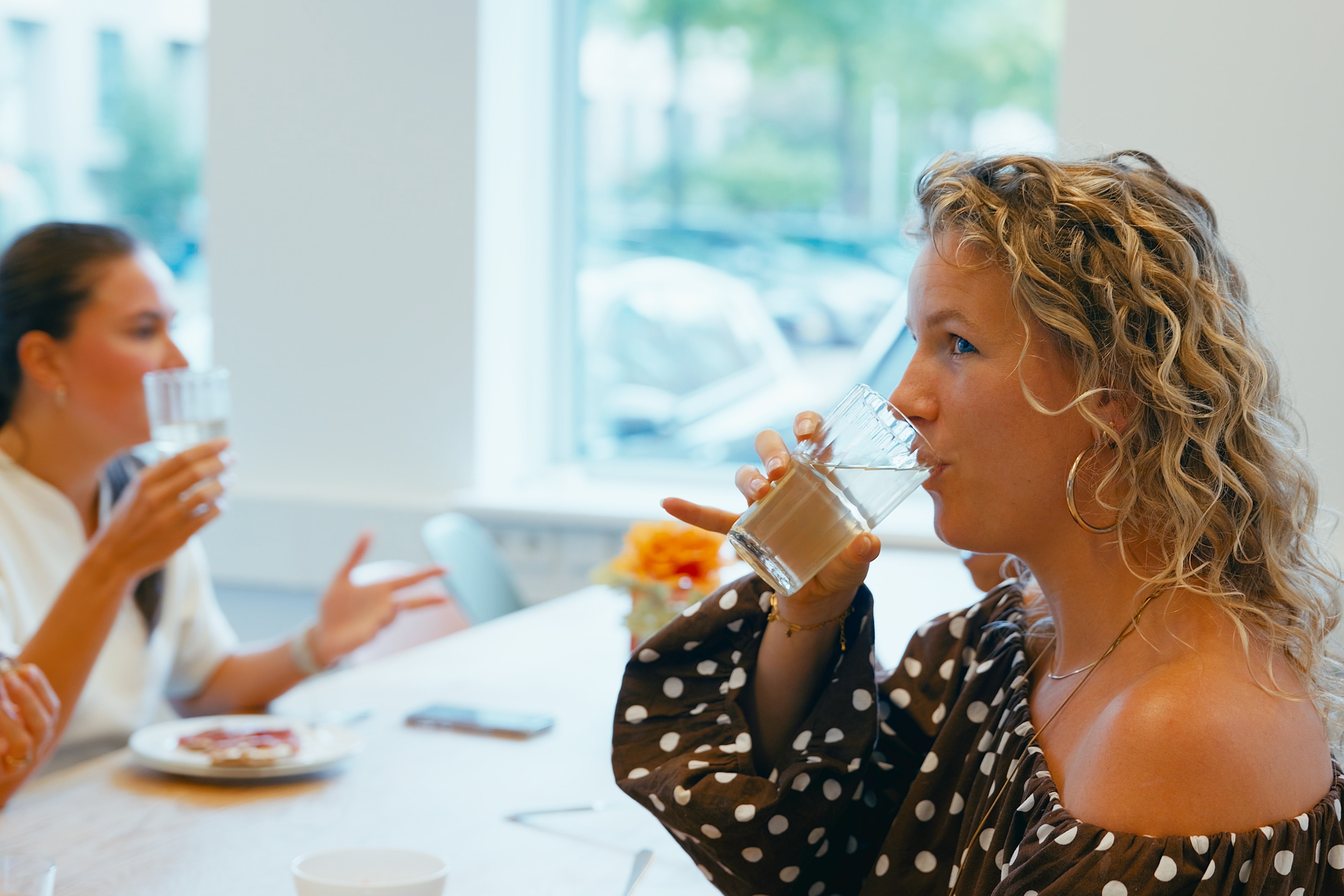
Knowing her people, she knew a proper hydration point was exactly the kind of thing they would notice. "That's when someone recommended Aquablu. I looked at it and thought, this is great: one machine, we're all on one floor." With almost everyone in the office every day, Stacy’s after the compounding daily return of the small decisions.
"I see it and I know what needs to be done based on how people behave." — Stacy Bergener, workplace experience manager, Tebi
Questions like: "'Can I make you a coffee?', 'do you want some sparkling water?' It creates a family moment," she says. Stacy expects the hydration point to earn its place in exactly that spot. "I really think everyone will realise what a game changer it is," she says. "It's like the watering hole where all the animals come together to drink. It's going to elevate the space."
Takeaway: Growth had pulled the team apart, and the move was the chance to bring it back together. Start with how your people behave, build the space around where they gather, and fit it to them rather than to a template.
See how Tebi did it
More resources

Previous article
In conversation with Marnix: signing it off
Aquablu CEO Marnix Stokvis made the final calls on our own office move. We asked him what he wishes we had done differently, what he thinks is worth fighting for, and how he decides on a cost that will never show a qualitative return.
Next article
Mysolution: Home is where the hub is
Don't stop here
There's a lot more where this came from
You just read one article out of a whole edition, but the full edition is yours to download (for free)